

Prof. Dr Dr h.c. mult. Carl Horst Hahn
Programme for the 100th birthday of the honorary citizen of Chemnitz

Chemnitz is commemorating its honorary citizen Prof. Dr Carl Horst Hahn, one of the most important entrepreneurs in German automotive history, with numerous events on the occasion of his 100th birthday on 1 July.
The accompanying programme combines automotive history, culture and personal memories and invites visitors to rediscover the life's work of Prof. Dr Carl Horst Hahn and the history of Chemnitz as an automotive location.
You can find more information about Carl H. Hahn in the brochure available for download:
Honorary citizen Carl H. Hahn

The long-standing VW manager Carl Horst Hahn was born in Chemnitz on 1 July 1926.
The city of Chemnitz made him an honorary citizen on 9 June 1994.
moreReception and entry in the Golden Book of the City of Chemnitz
To mark the 100th birthday of Prof. Dr Carl Horst Hahn, the city of Chemnitz honoured its honorary citizen – and one of the most significant figures in German motoring history – with a varied programme of events.
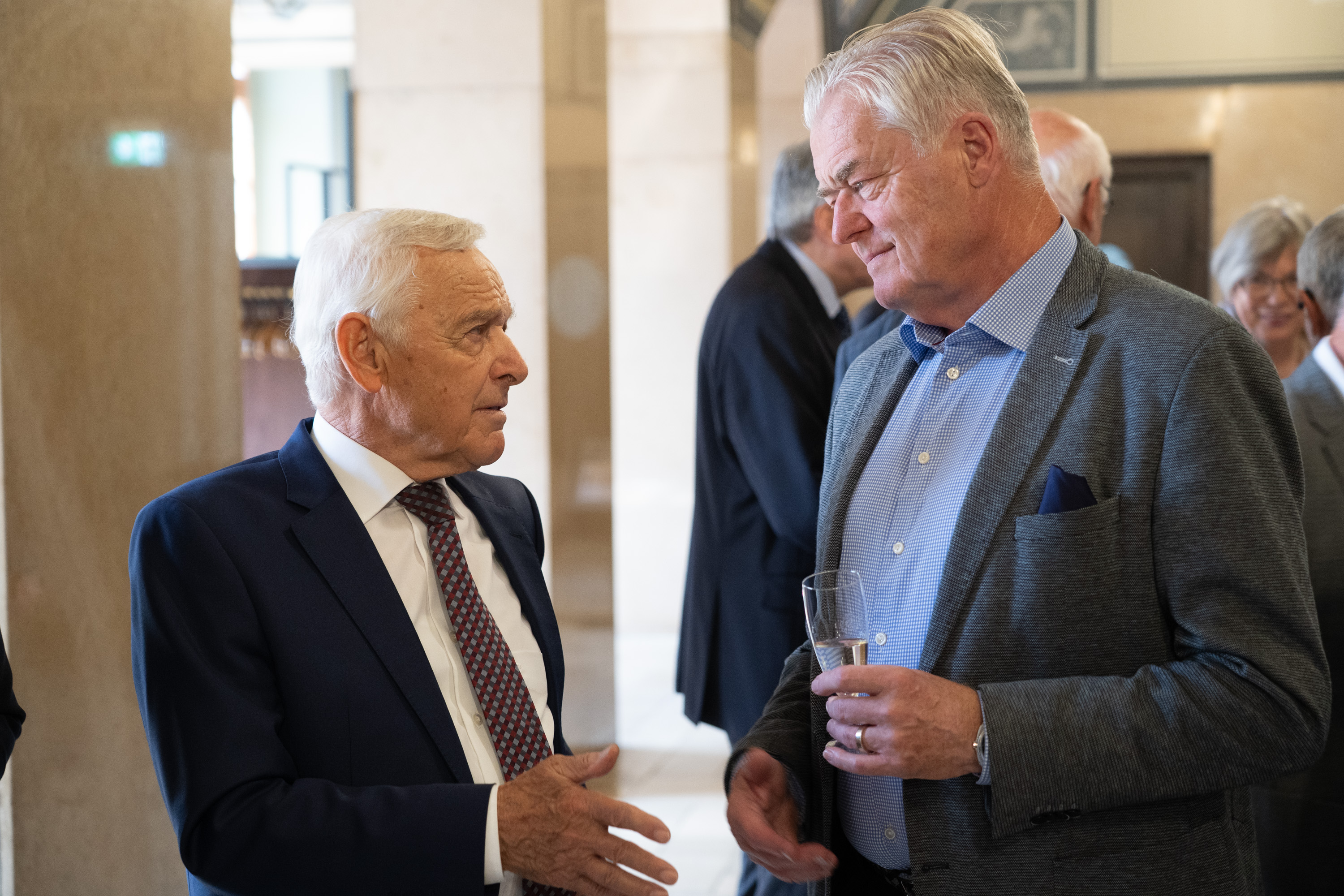
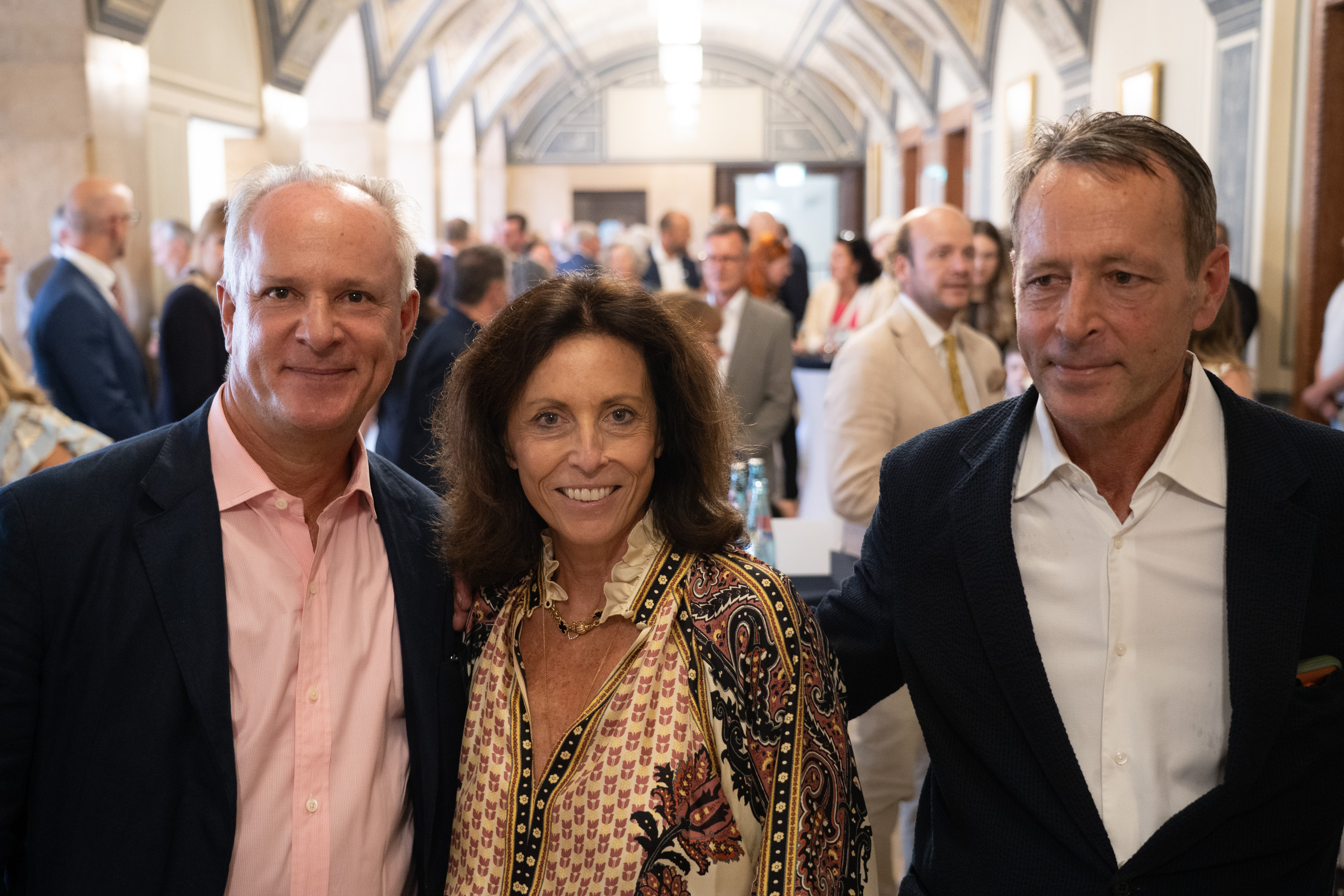
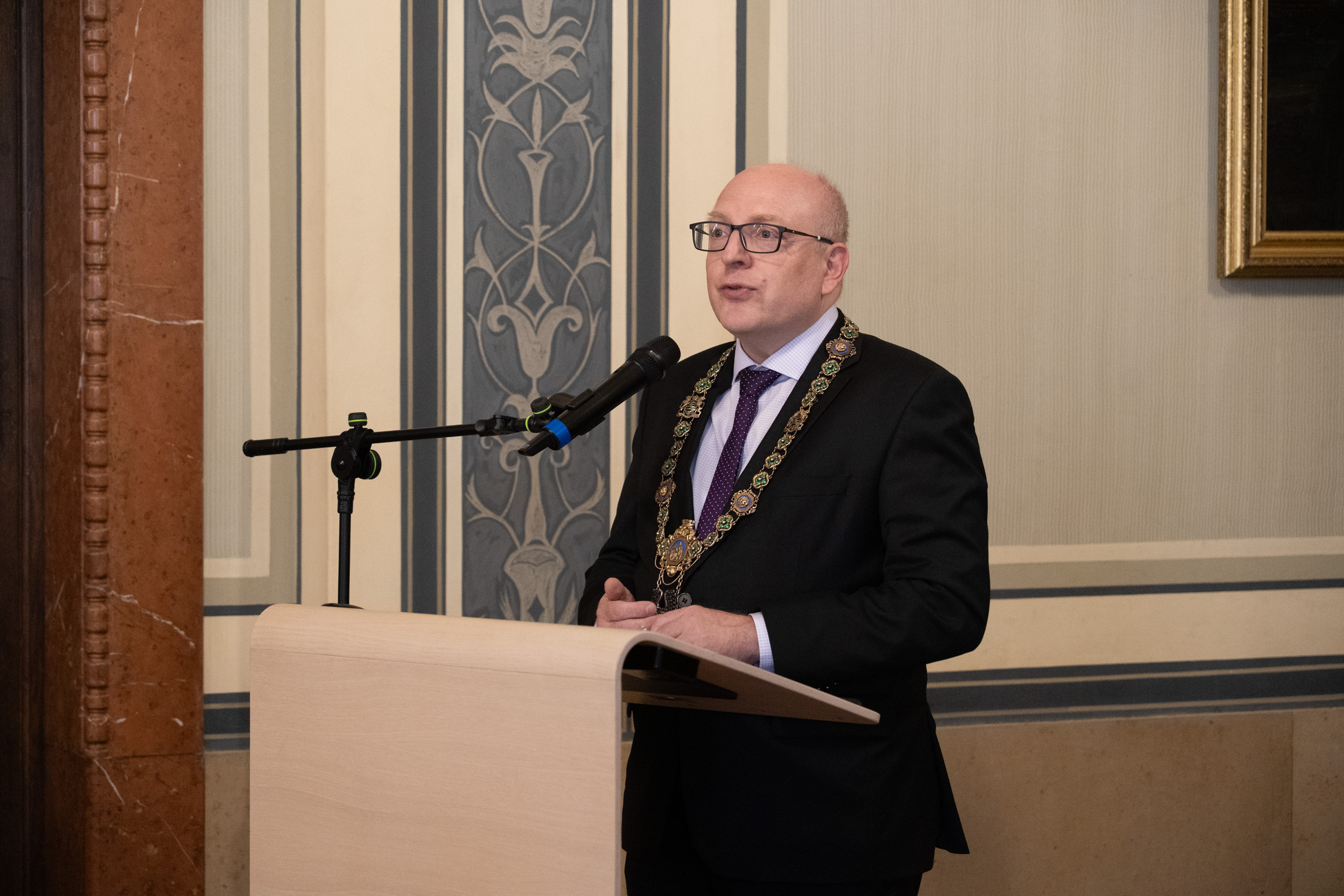
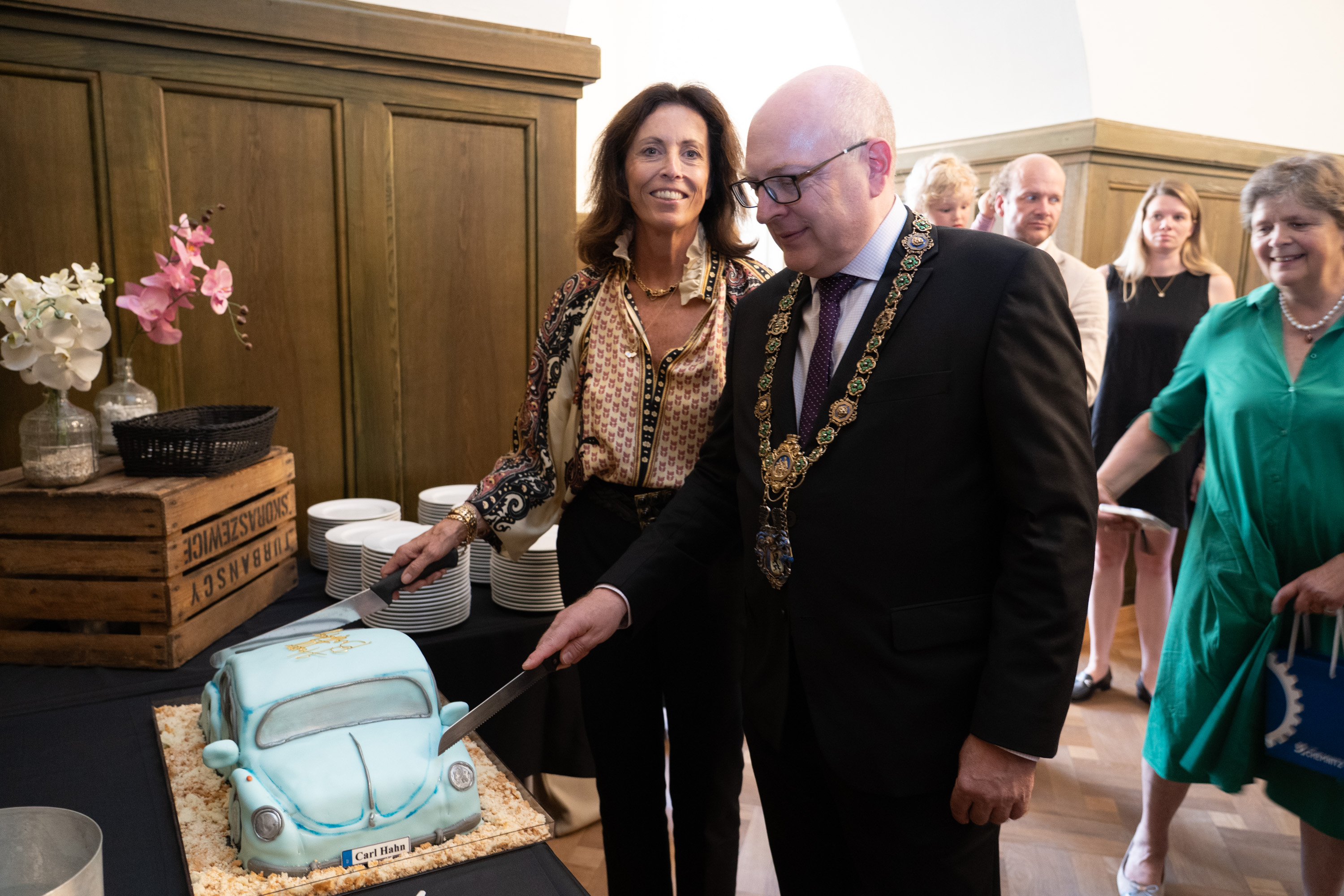
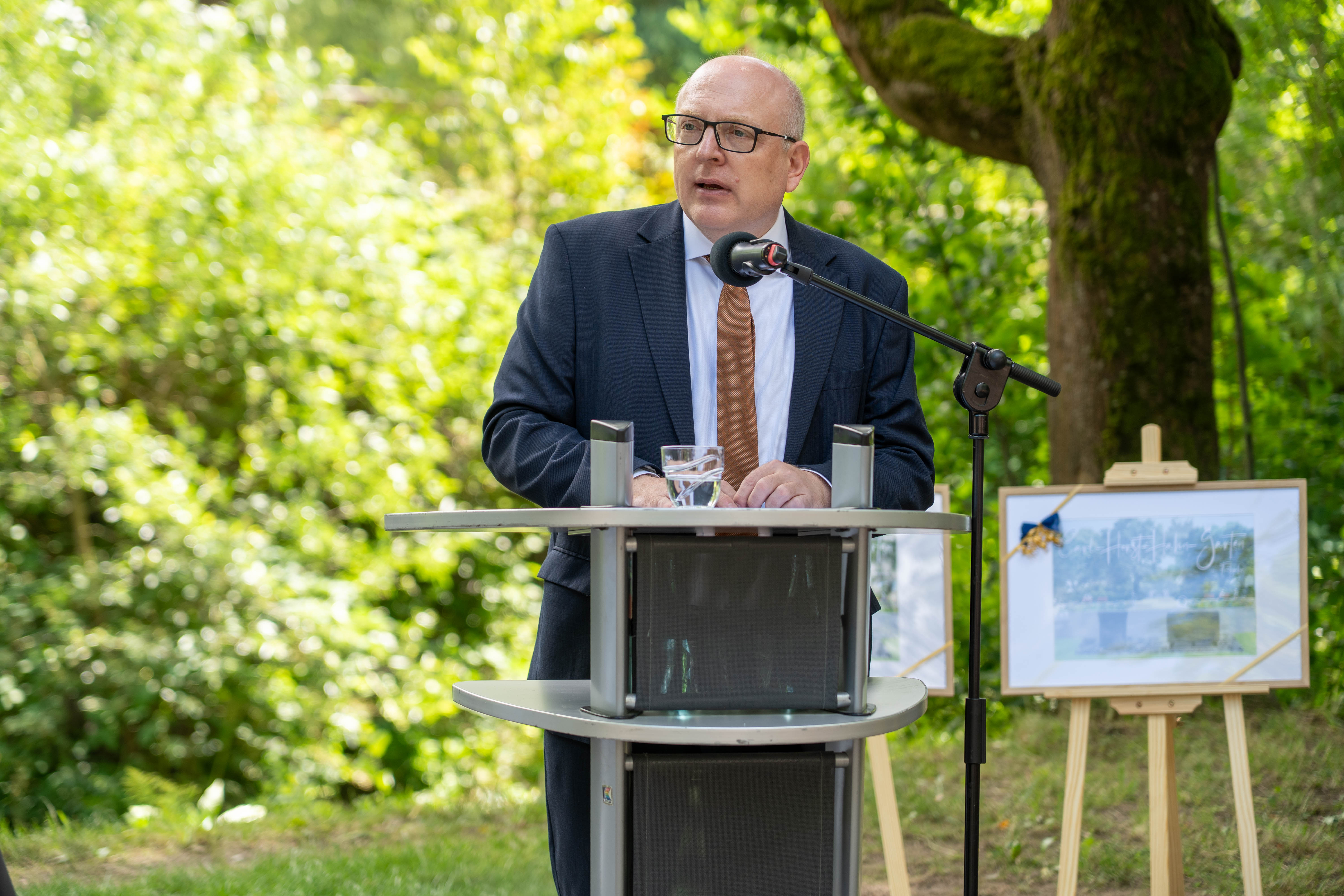
At Chemnitz Town Hall, Carl Horst Hahn’s life’s work was honoured with a formal reception attended by his family. Numerous colleagues, business partners and representatives of the Volkswagen Group gathered to pay tribute to one of the most significant managers in German automotive history. Lord Mayor Sven Schulze welcomed those present at the Town Hall.
“The long and rich history of Chemnitz as a centre of the automotive industry is inextricably linked with the name Carl Horst Hahn. For him, entrepreneurial success always went hand in hand with responsibility, down-to-earthness and a clear vision for the future. Born in Chemnitz, he remained closely connected to his home town throughout his life. His work as an entrepreneur, visionary and patron not only shaped the international automotive industry, but also played a decisive role in Saxony’s development and the creation of thousands of jobs following German reunification. That is why the memory of figures such as Carl H. Hahn is of great significance to our city. It highlights just how closely history, economic development and social commitment are intertwined.
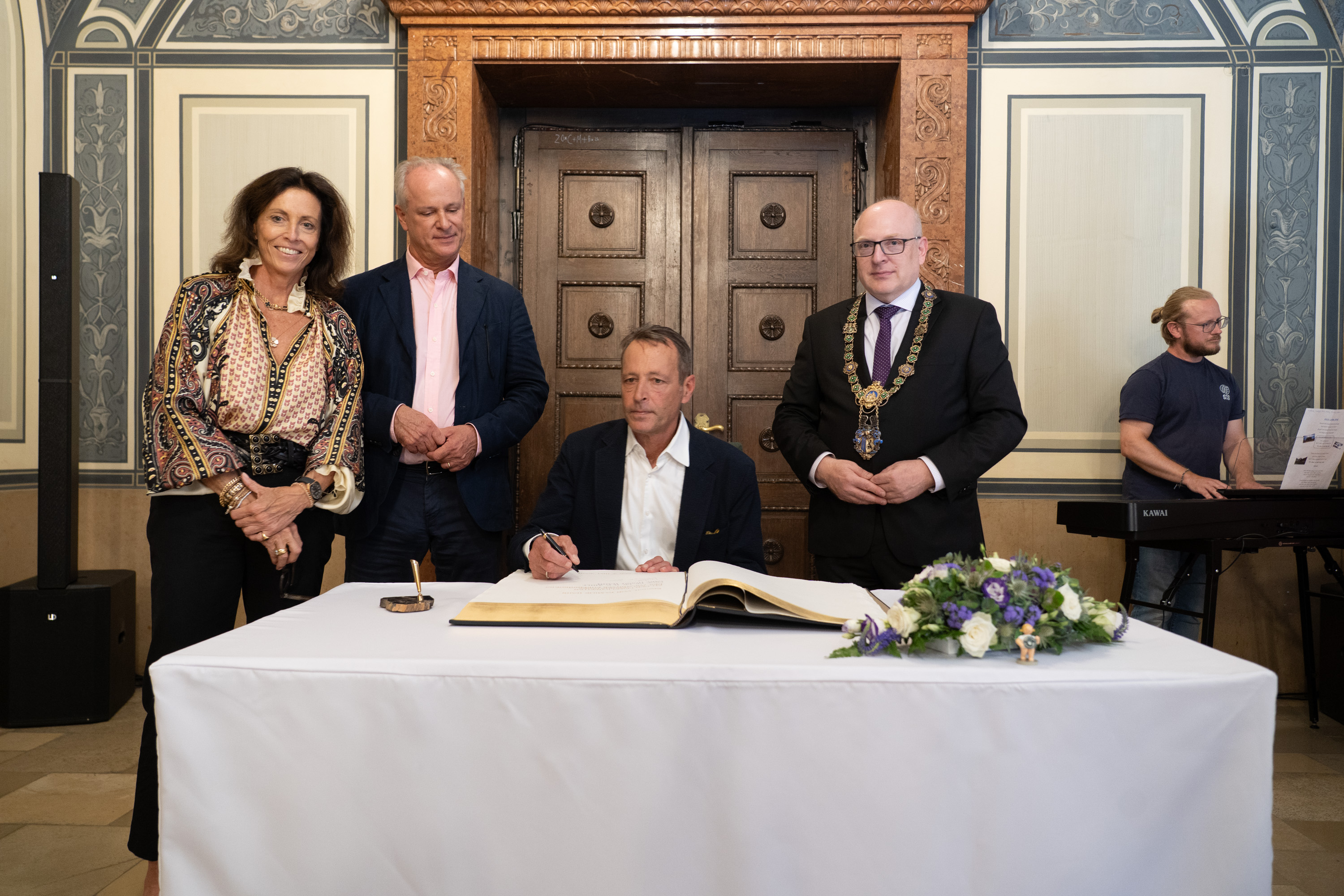
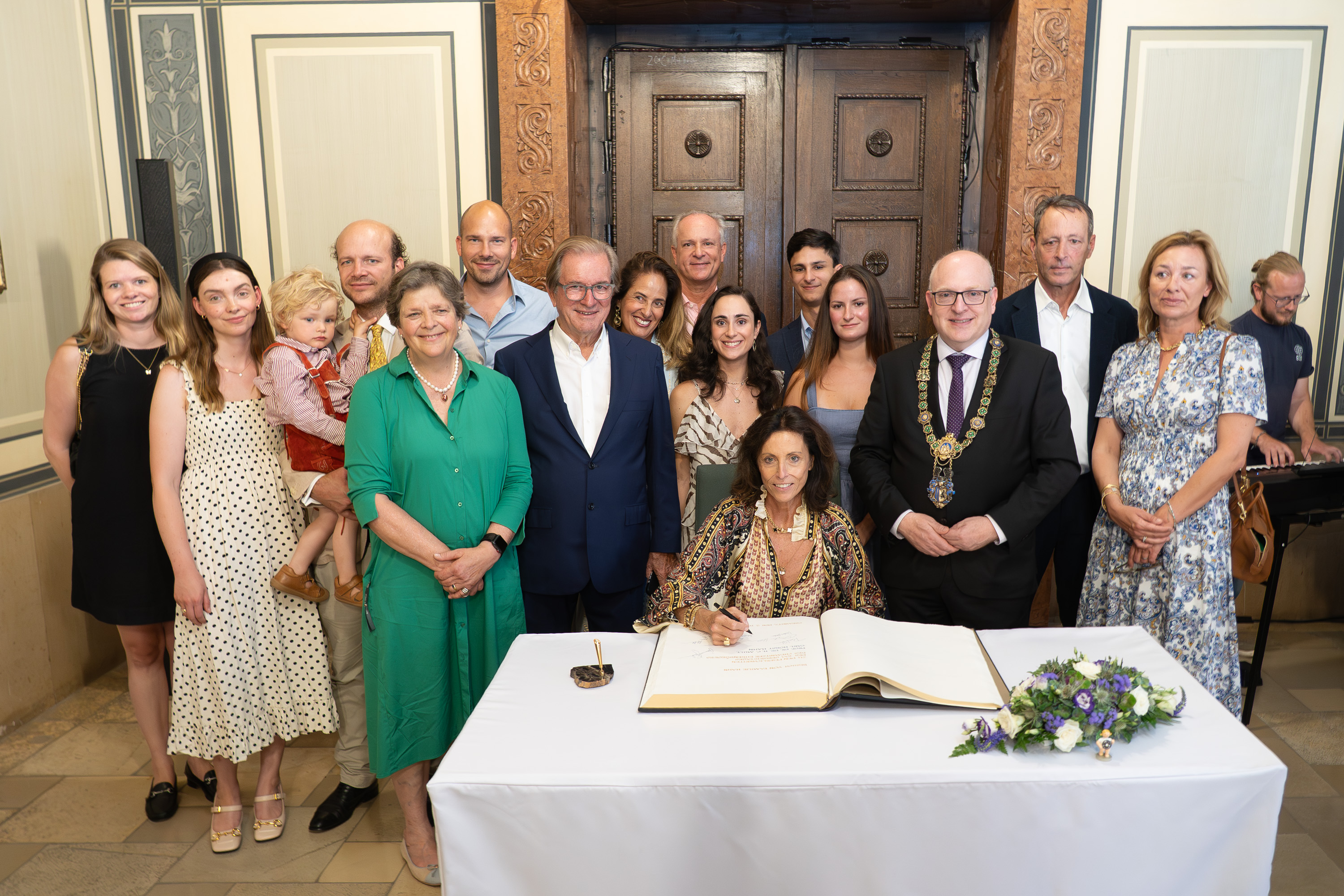
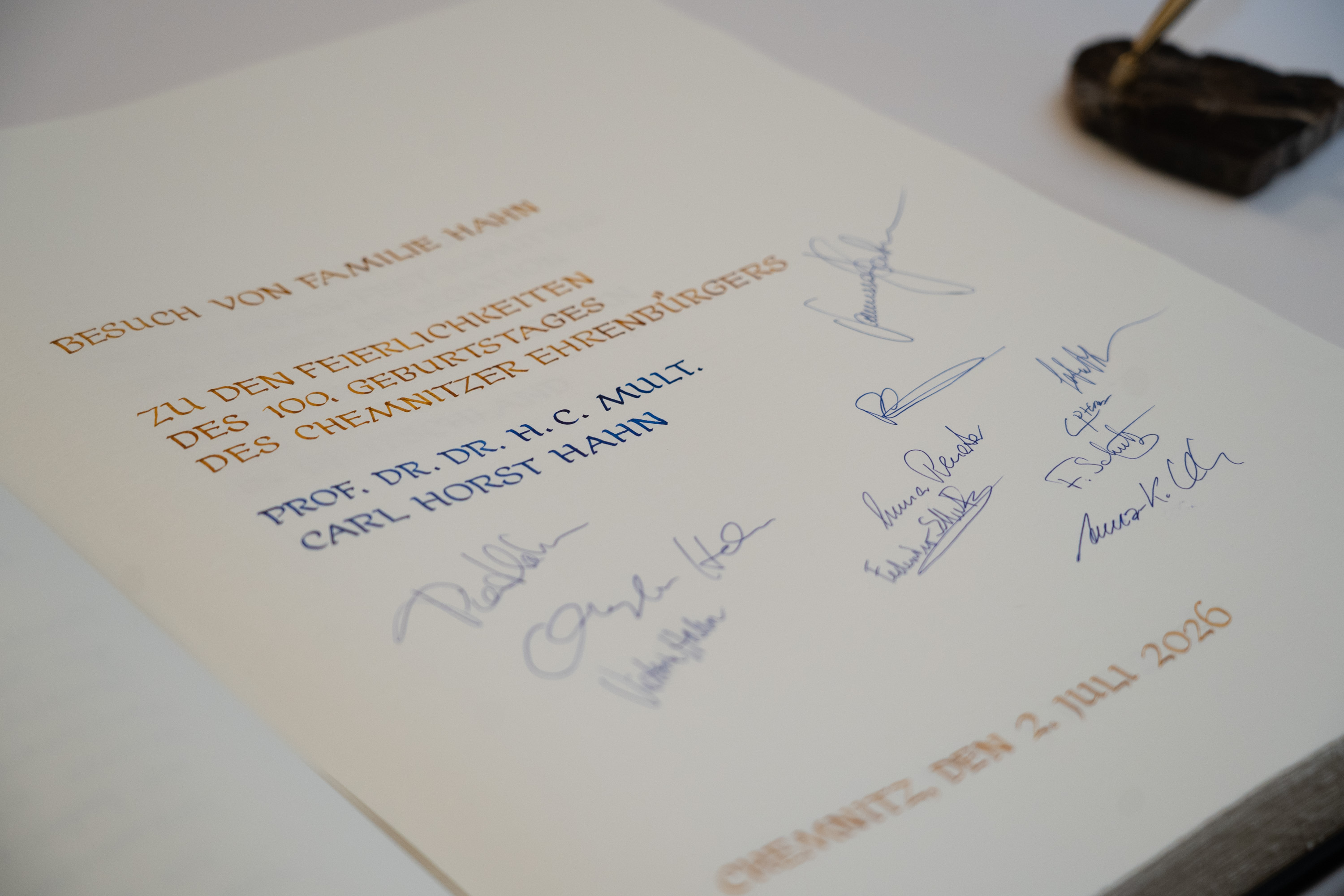
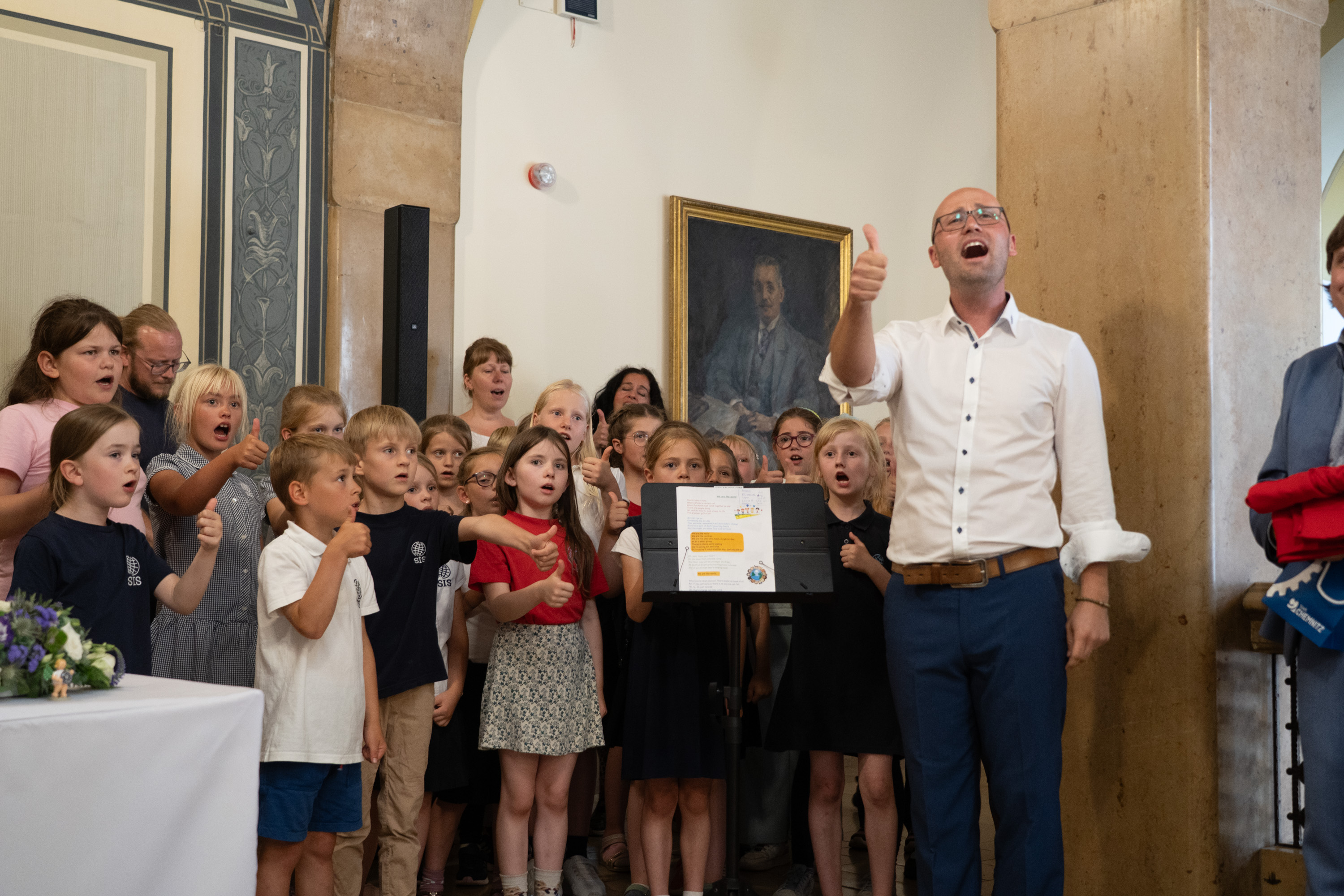
A special musical performance by the children’s choir of the Saxony International School Carl Hahn, as well as the ceremonial signing of the City of Chemnitz’s Golden Book by the Hahn family, provided a fitting backdrop to the reception.
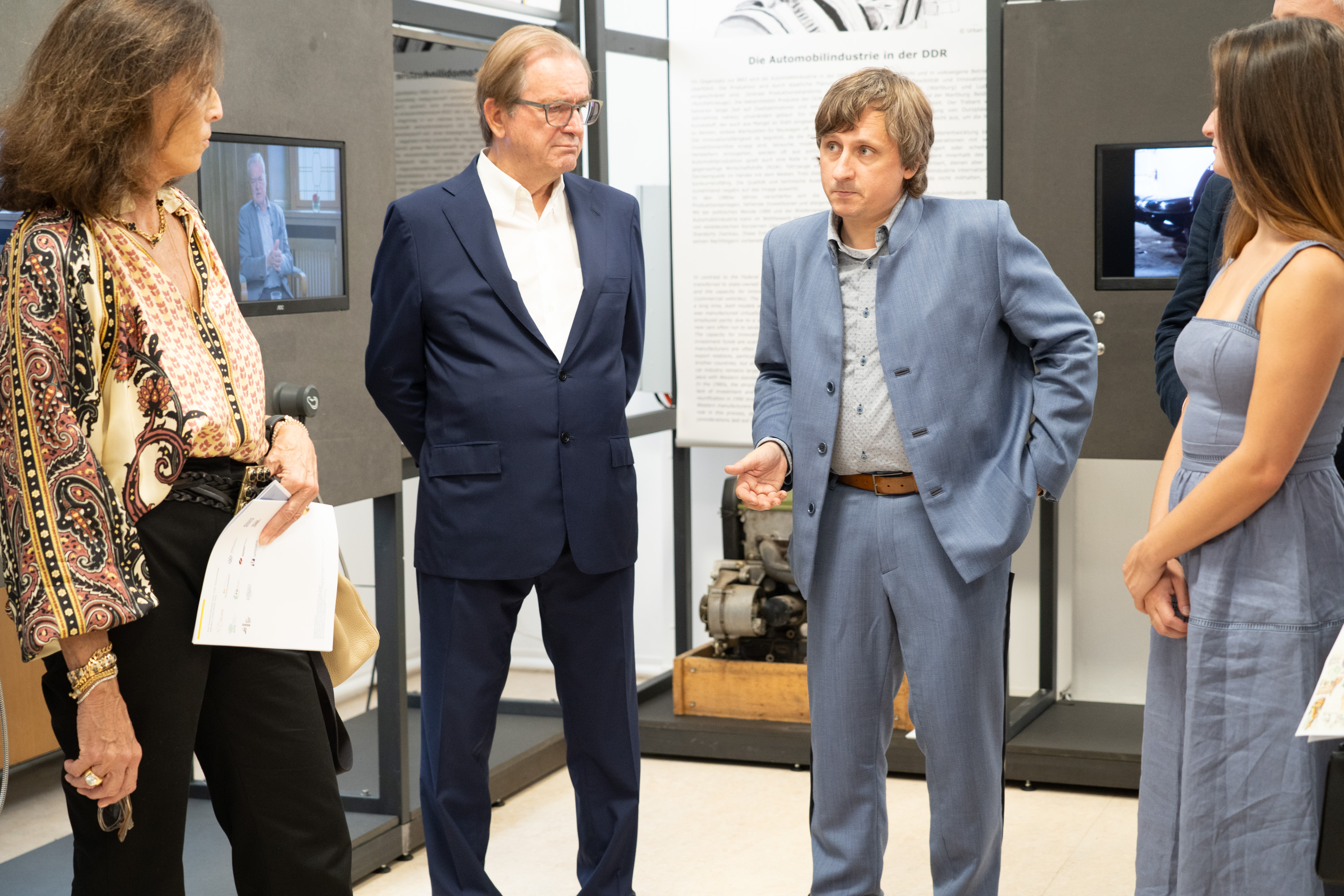
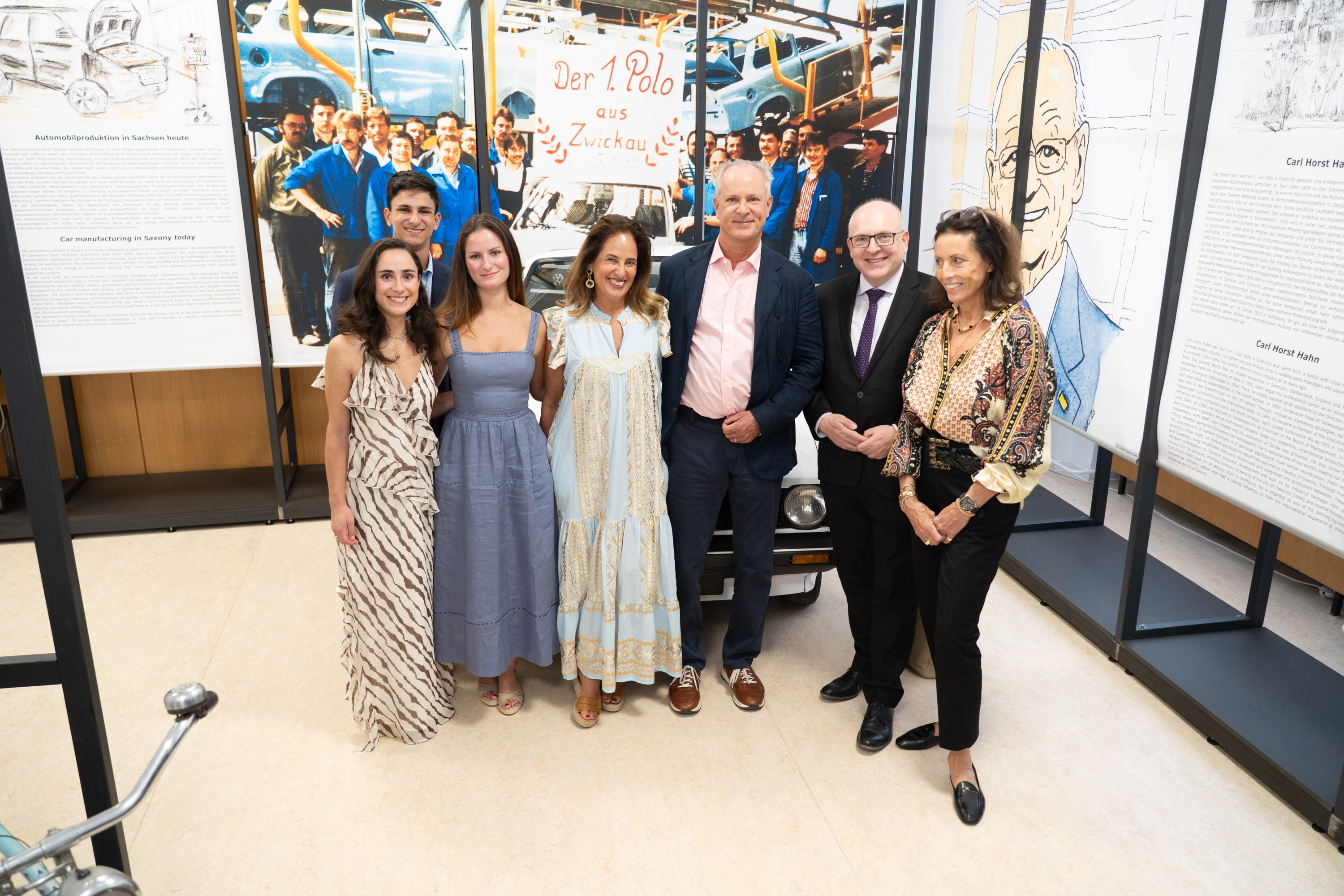
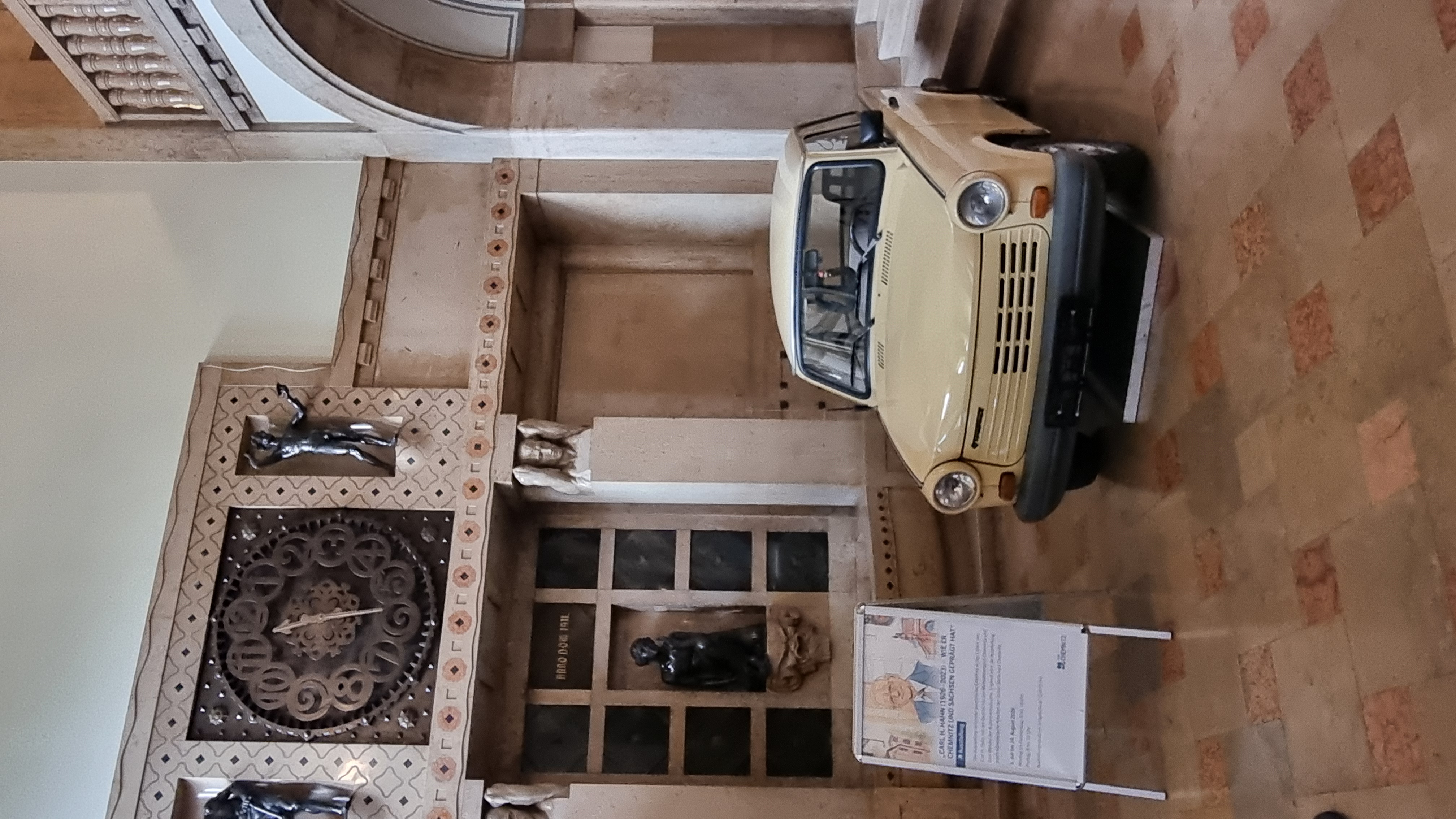
Following the reception, the exhibition ‘Carl H. Hahn (1926–2023) – How he shaped Chemnitz and Saxony’ was opened at Chemnitz Town Hall.
The exhibition combined personal insights into the life of Carl H. Hahn with the history of the Chemnitz mobility region and the transformation of the automotive industry. It was complemented by artistic works by the Urban Sketchers Chemnitz, as well as a Trabant 1.1 fitted with a four-stroke VW engine, which had been driven to the town hall especially for the occasion.
The exhibition was curated by the Chemnitz Industrial Museum in collaboration with the Museum of Saxon Vehicles.
Sachsen Fernsehen – Carl Hahn’s legacy and the Trabant’s journey to the Town Hall
A Trabant at the Town Hall – Carl Horst Hahn Exhibition

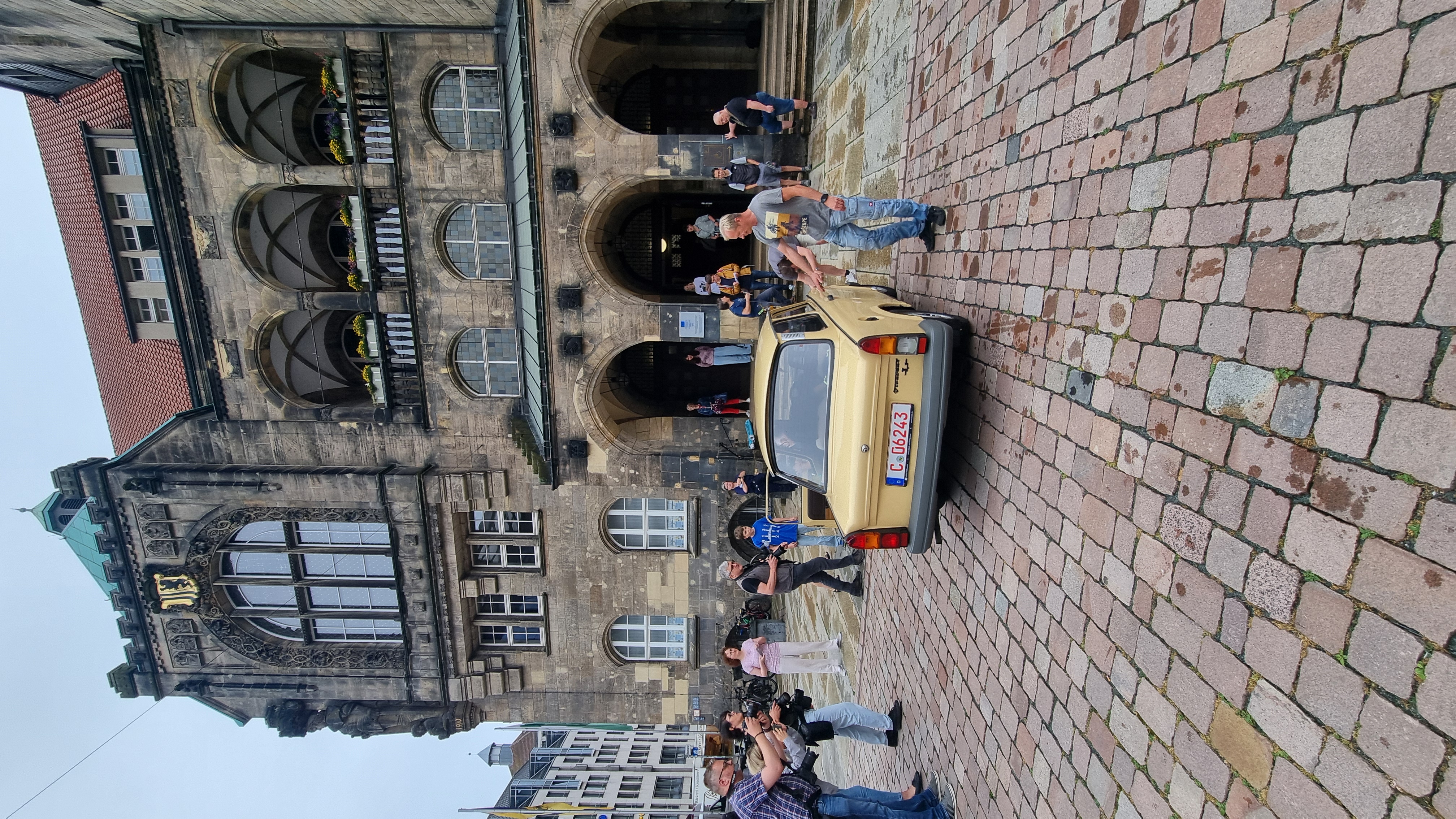
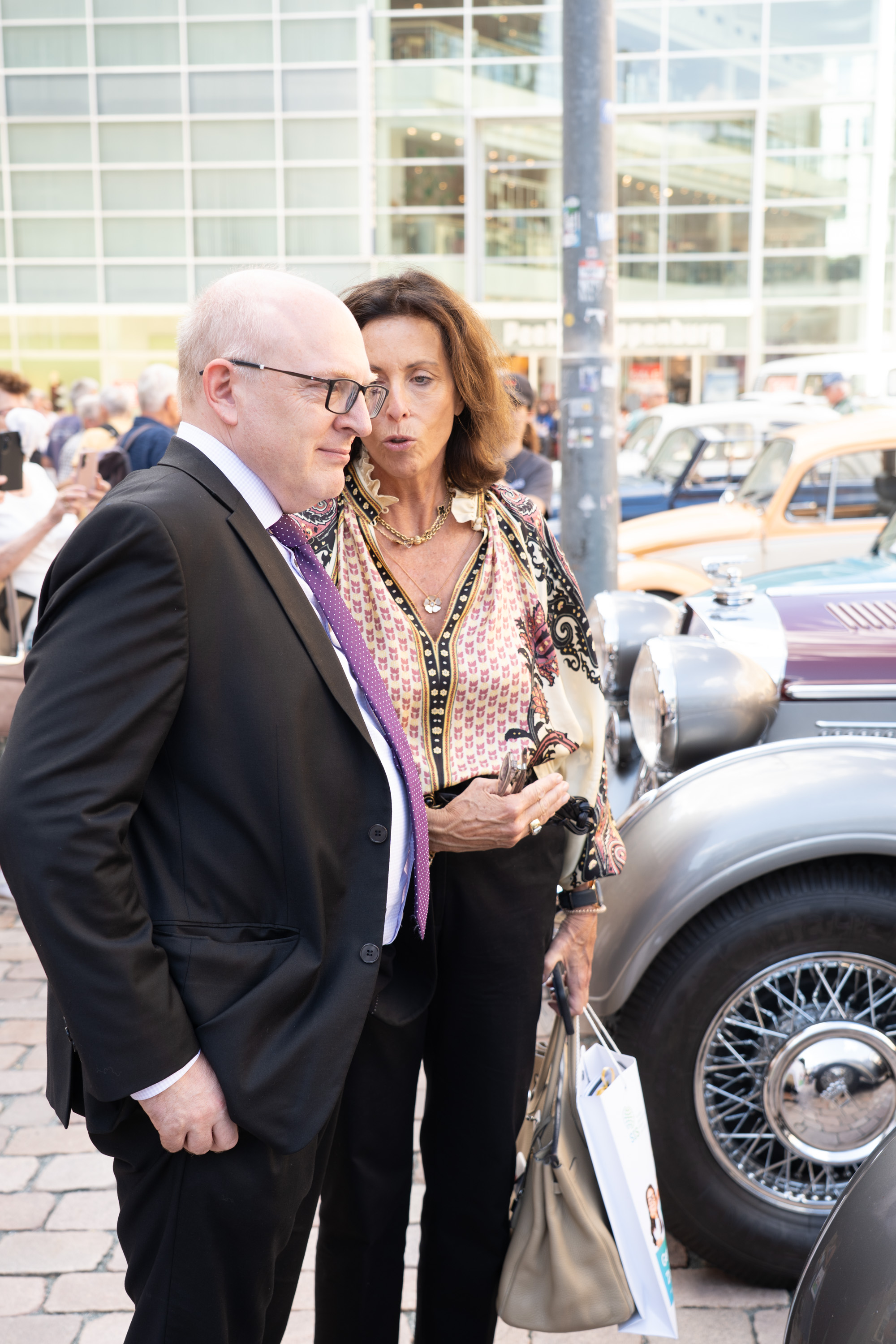
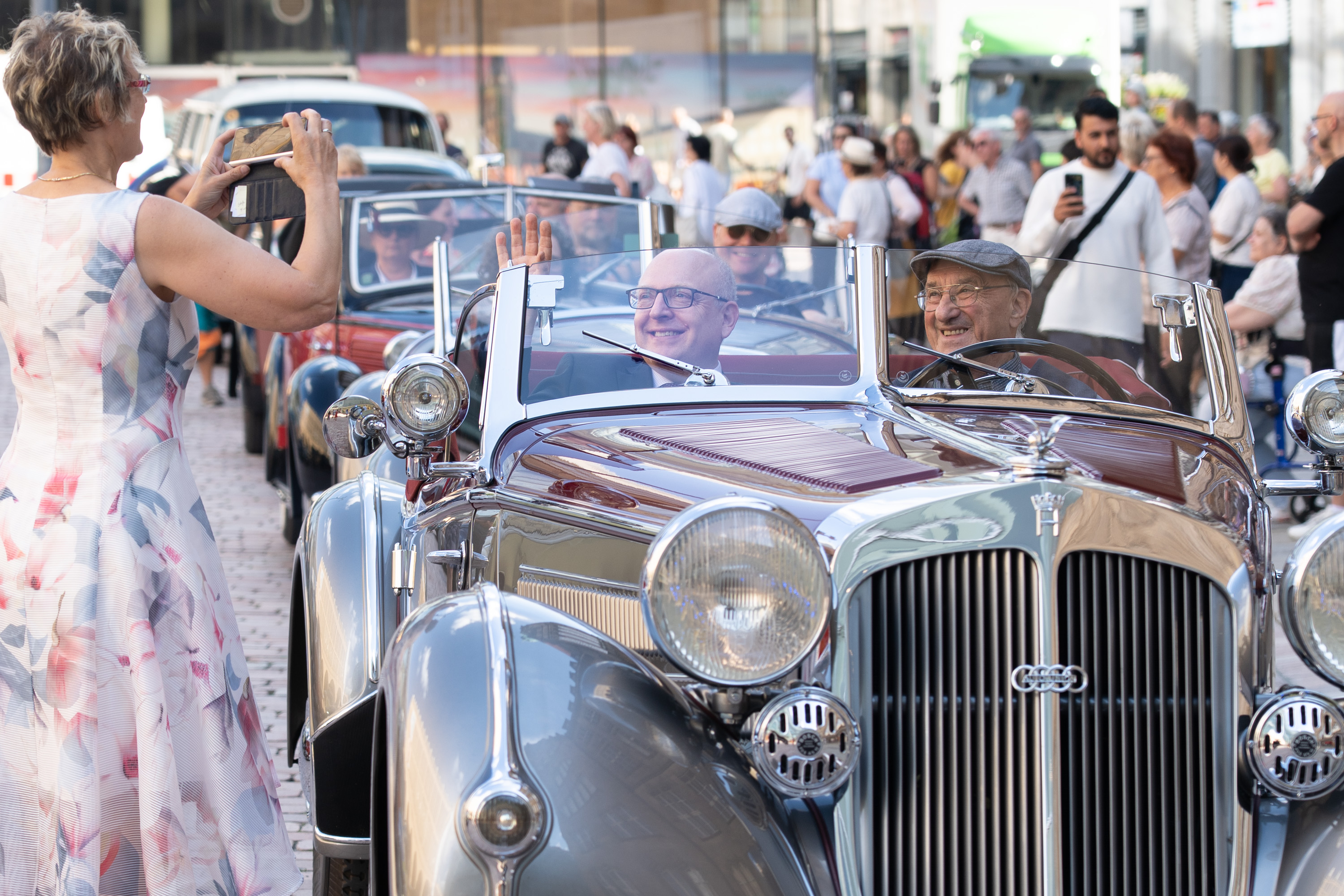
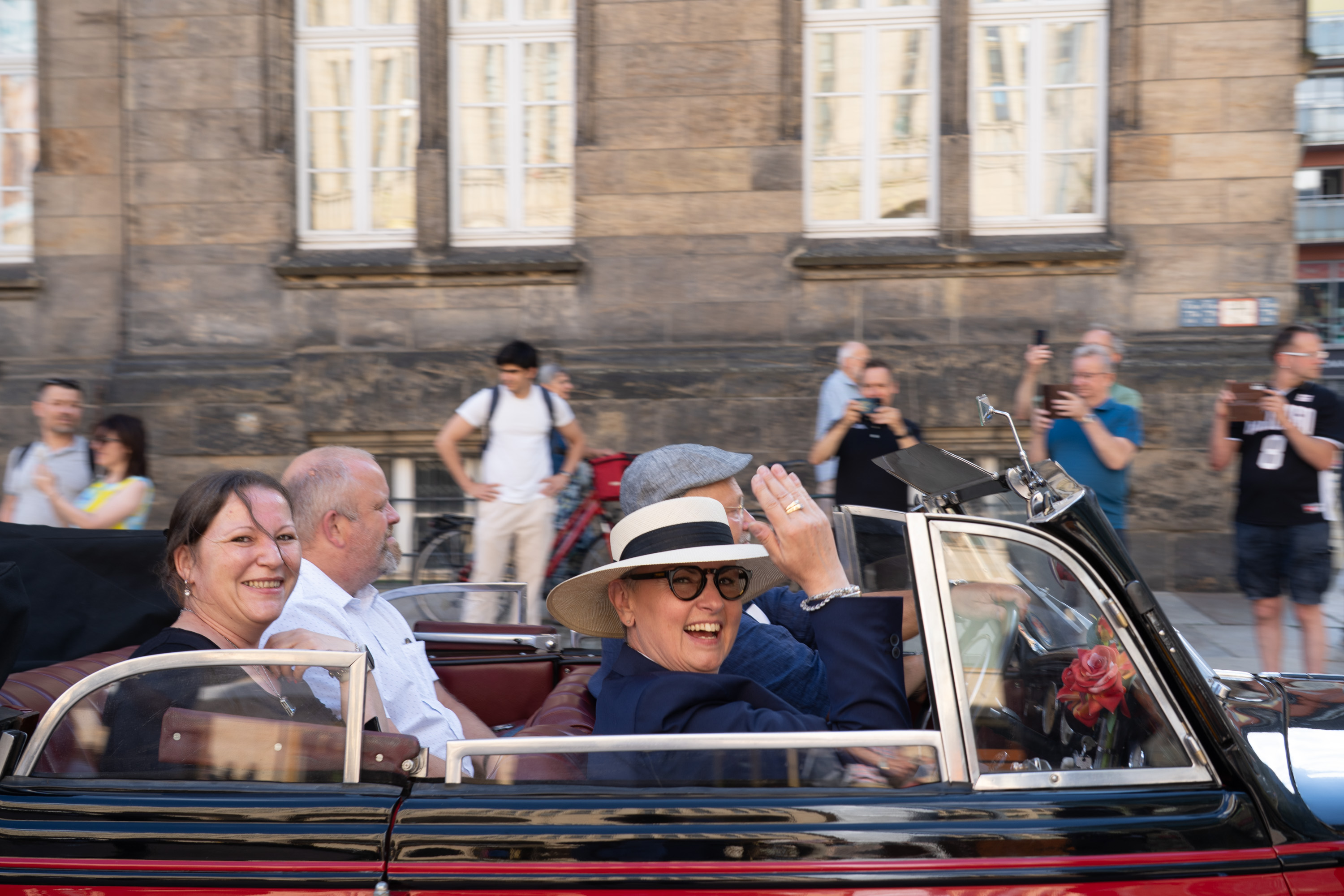
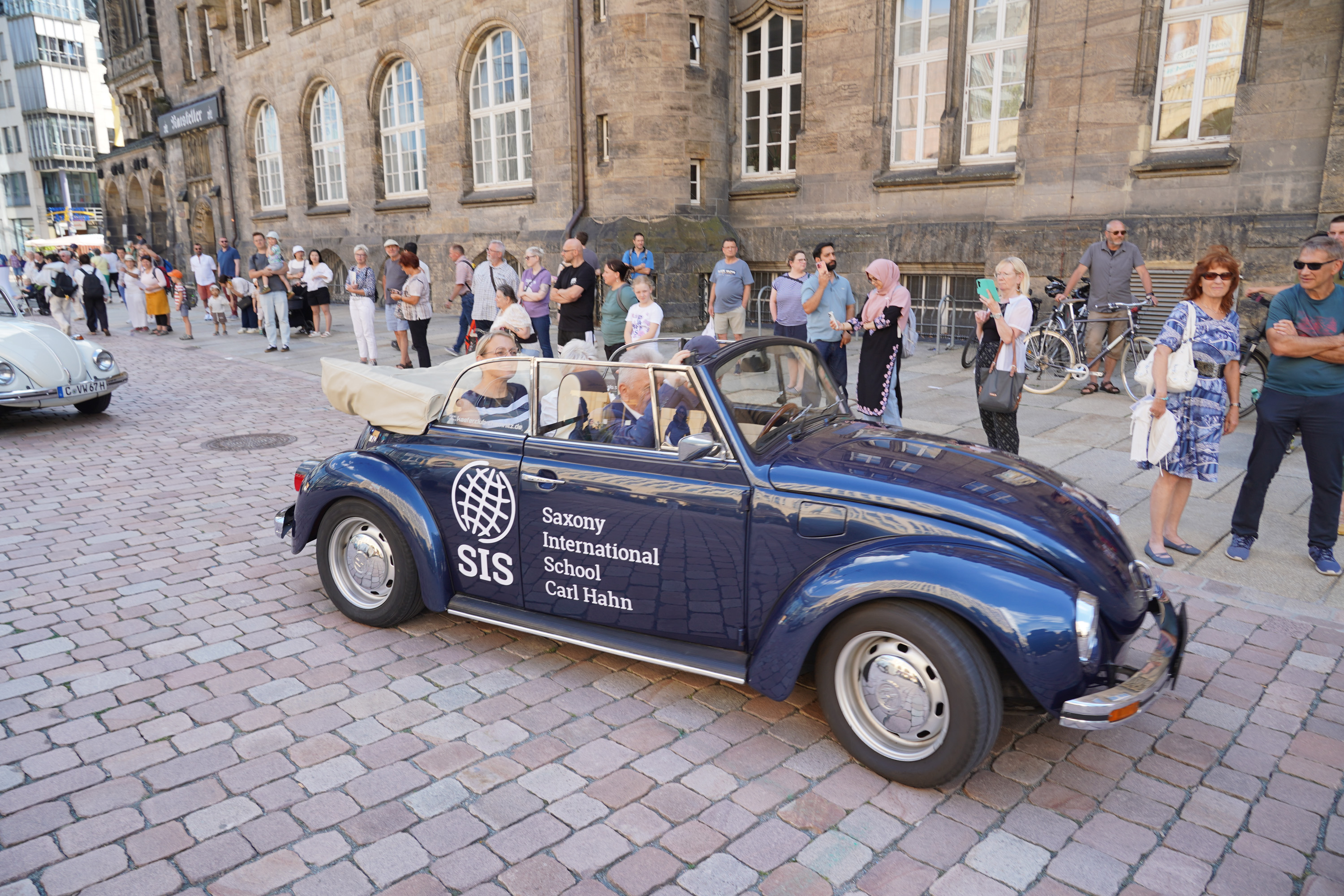
A classic car parade, organised by the 1st Chemnitz Beetle Club “Ferdinands Erben”, took place on Neumarkt to commemorate the rich tradition of Chemnitz’s automotive industry and highlight the city’s close ties to the development of car manufacturing. Accompanied by the classic car parade, the Hahn family and many other guests of honour travelled in the historic vehicles from the Town Hall to St Peter’s Church on Theaterplatz.
A gala concert by the Chemnitz Baroque Orchestra, featuring Steffen Walther on the Ladegast-Jehmlich organ, took place in the church where Carl Horst Hahn was baptised. The preservation of the organ is largely thanks to the commitment of Carl Horst Hahn. The concert was a joint event organised by the Saxon Mozart Society (Sächsische Mozart-Gesellschaft e. V.) and the City of Chemnitz, with the kind support of the St Petri Castle Parish.
Sachsen Fernsehen: Traces of a Visionary
MDR Sachsenspiegel: Manager – Visionary – Bridge-builder – Chemnitz honours Hahn
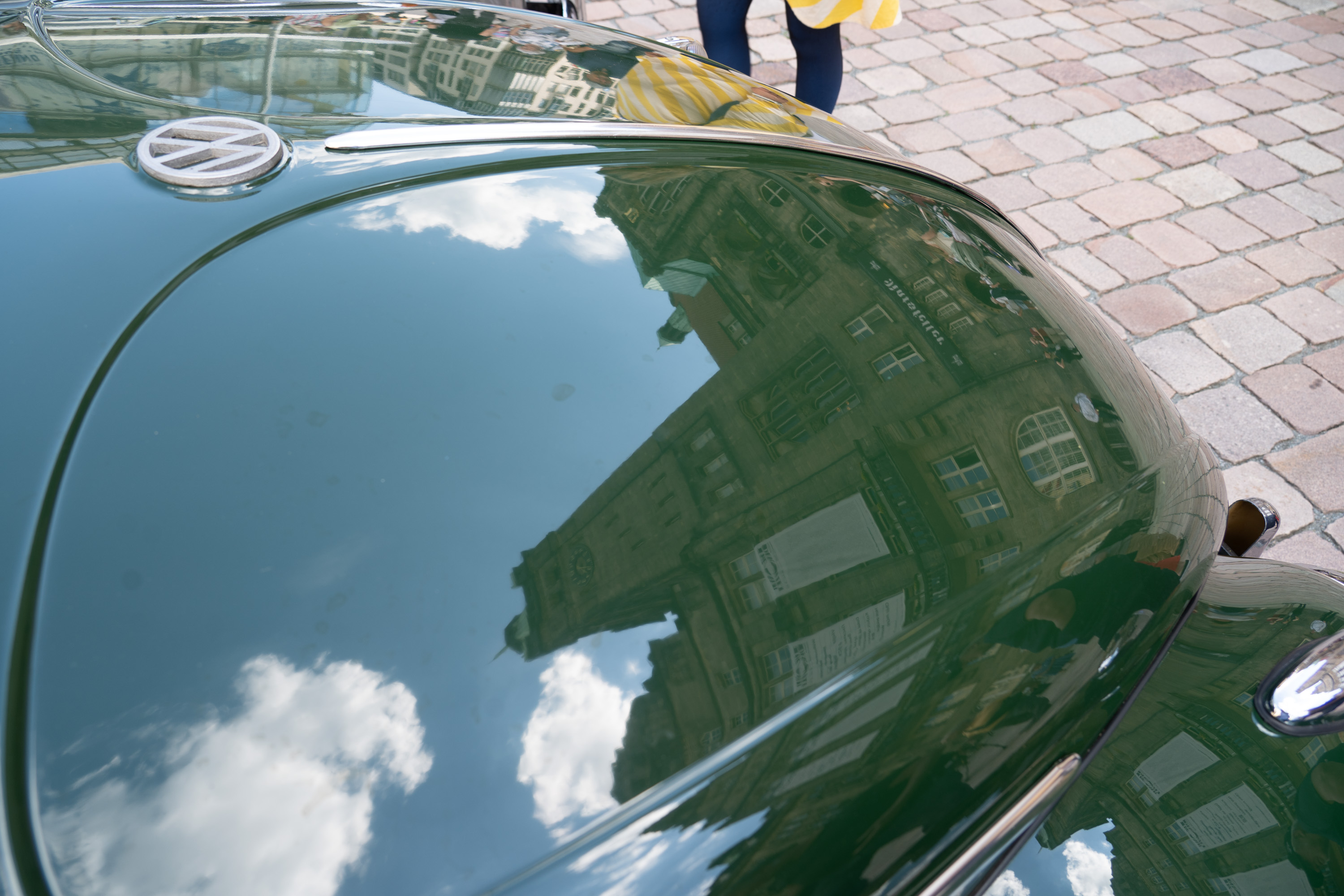
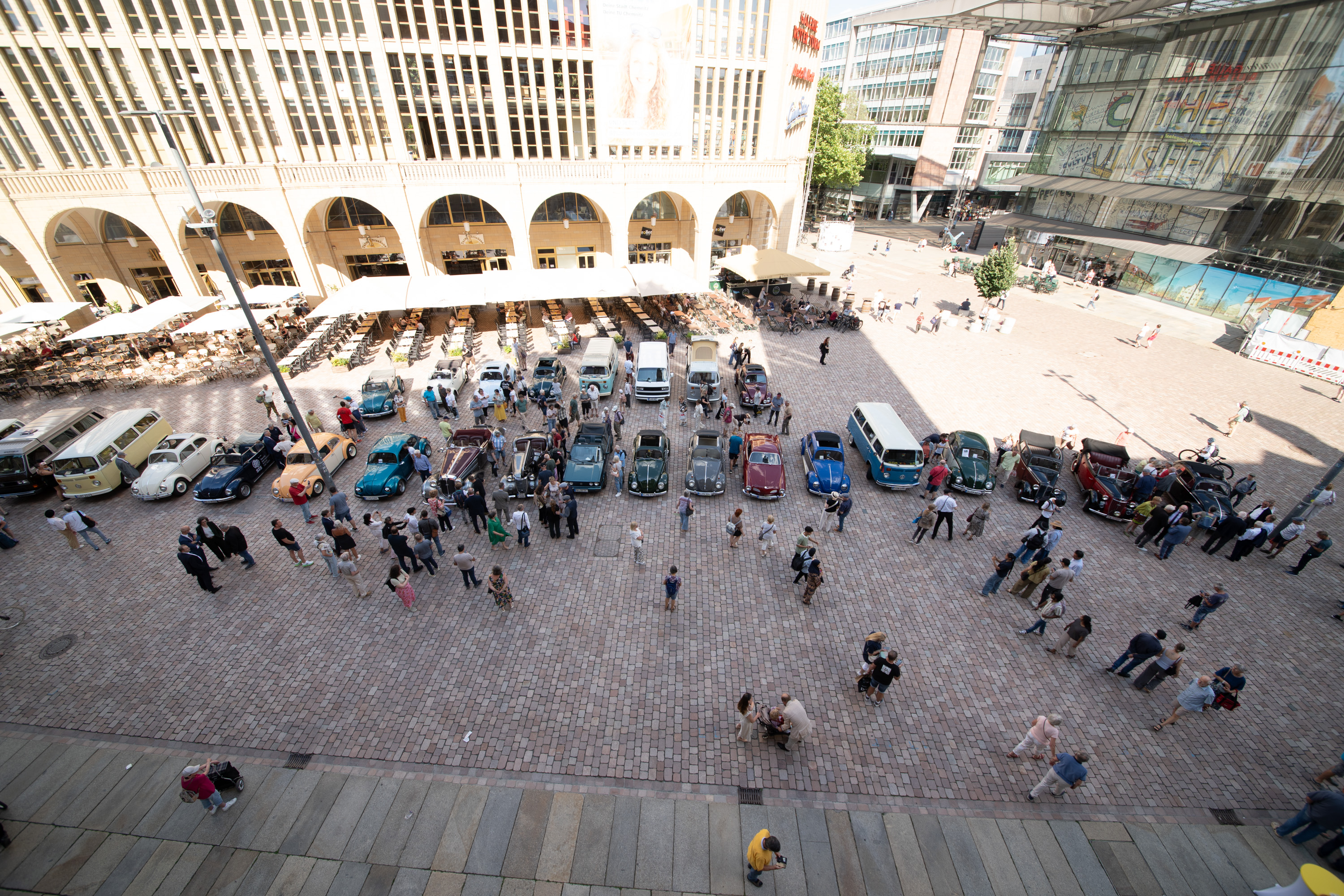
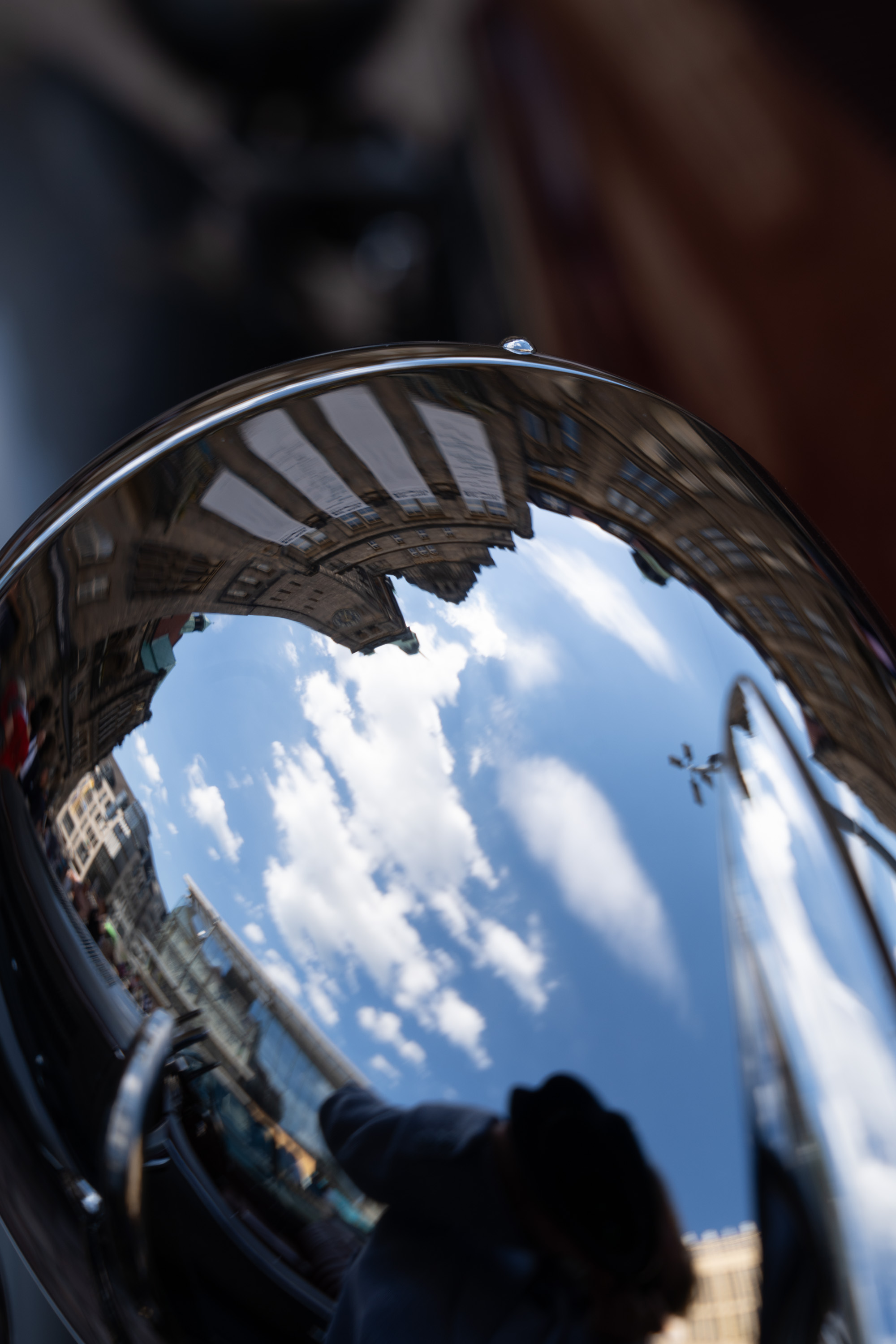
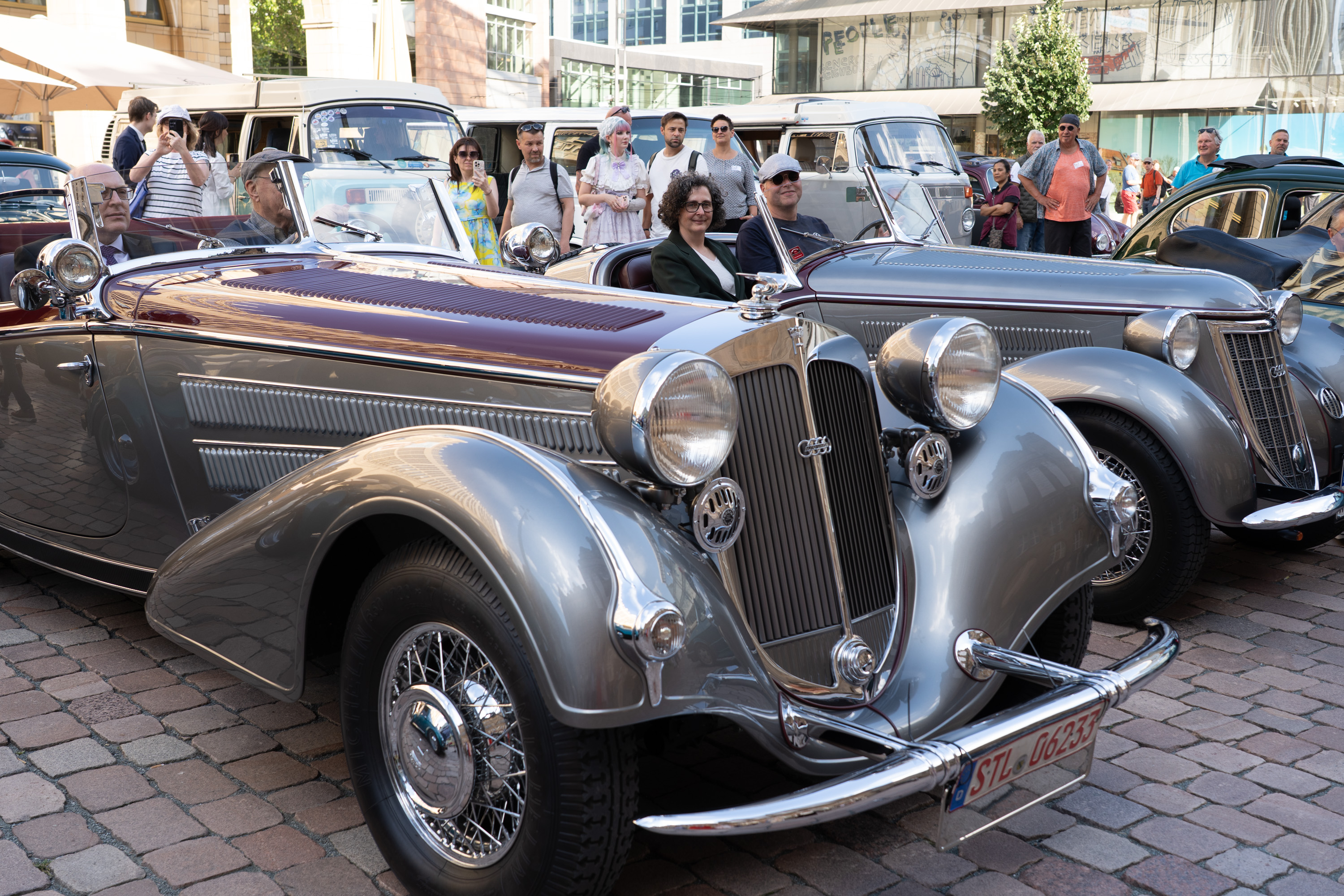
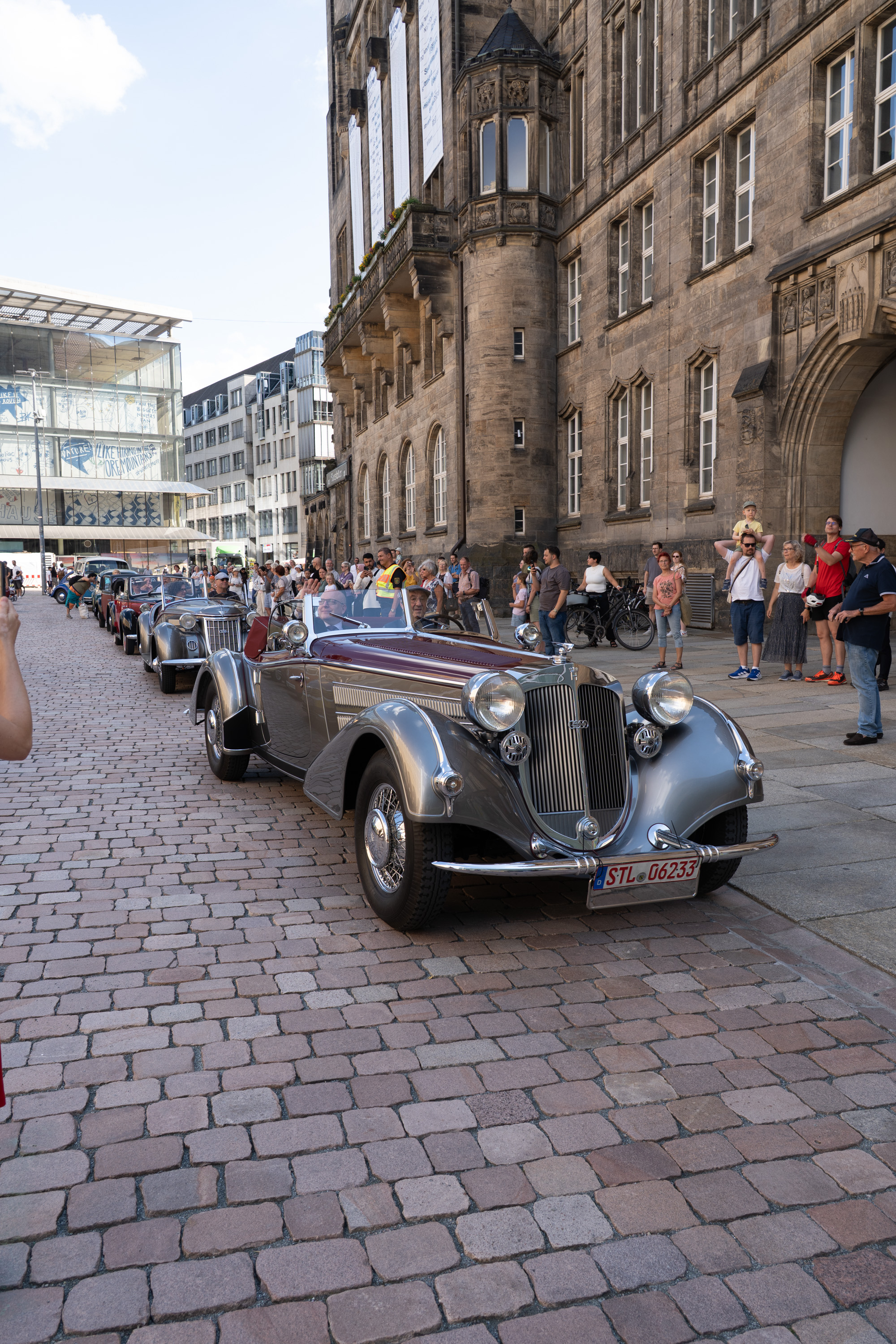
Classic Car Parade & Concert at St Peter’s Church
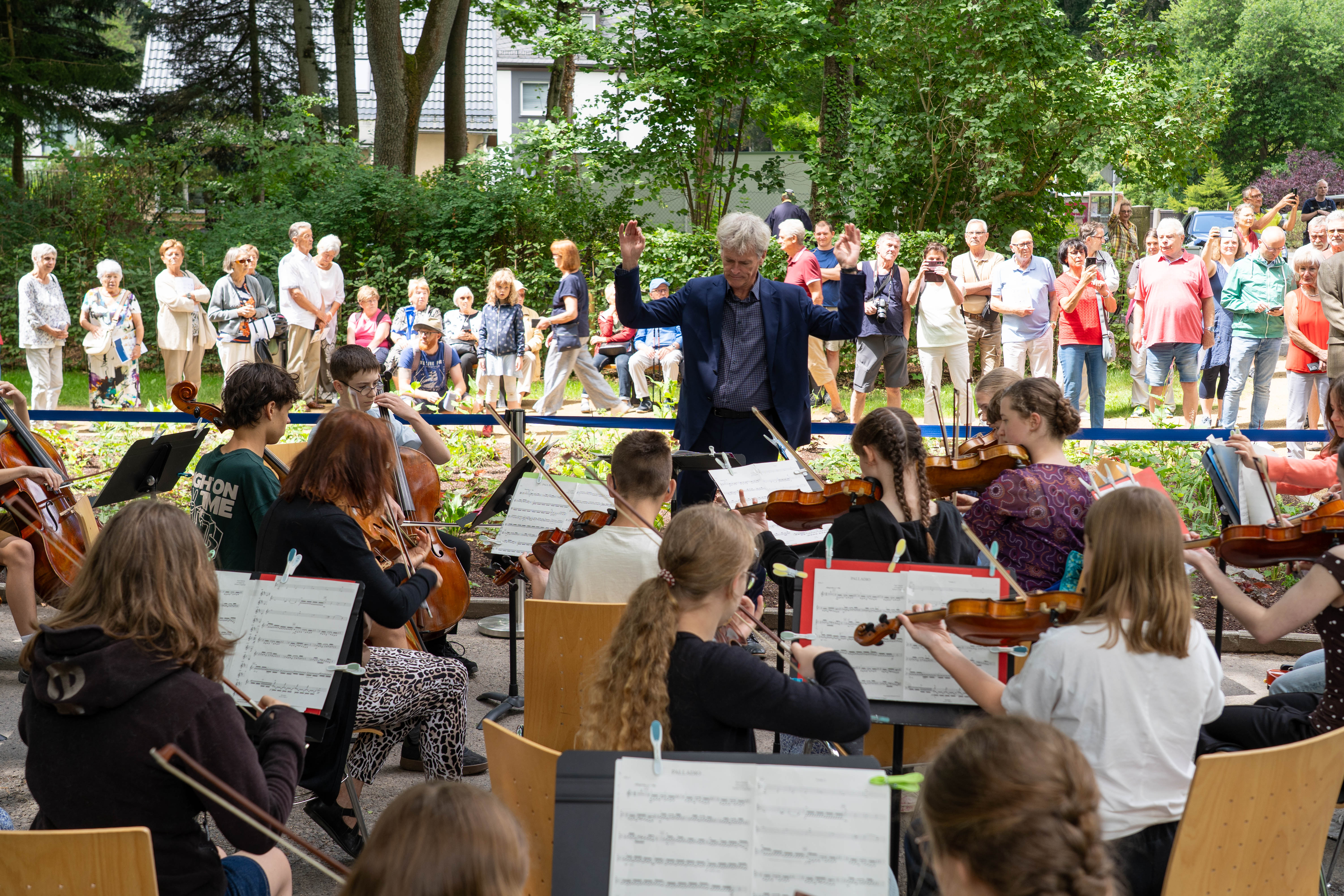
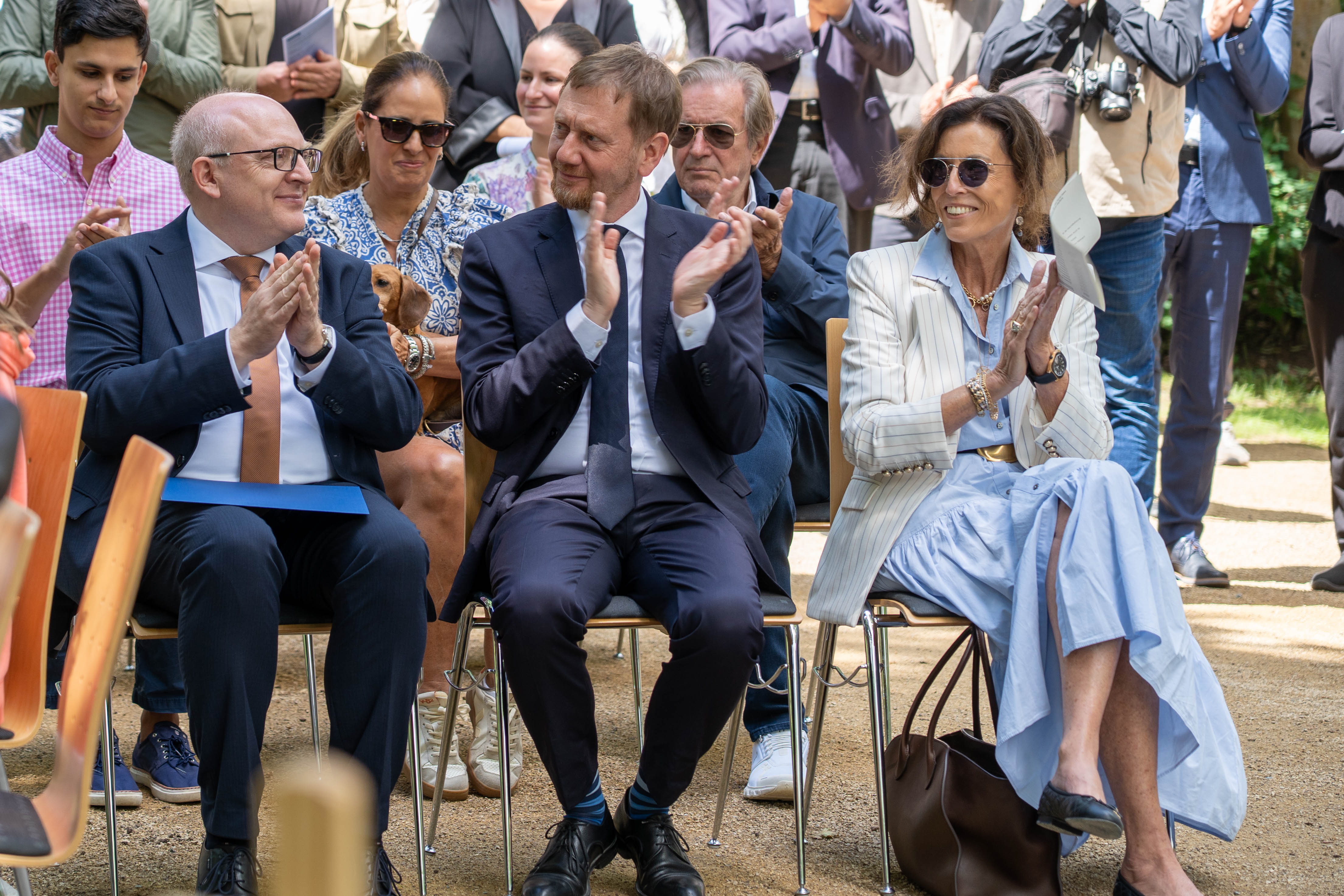
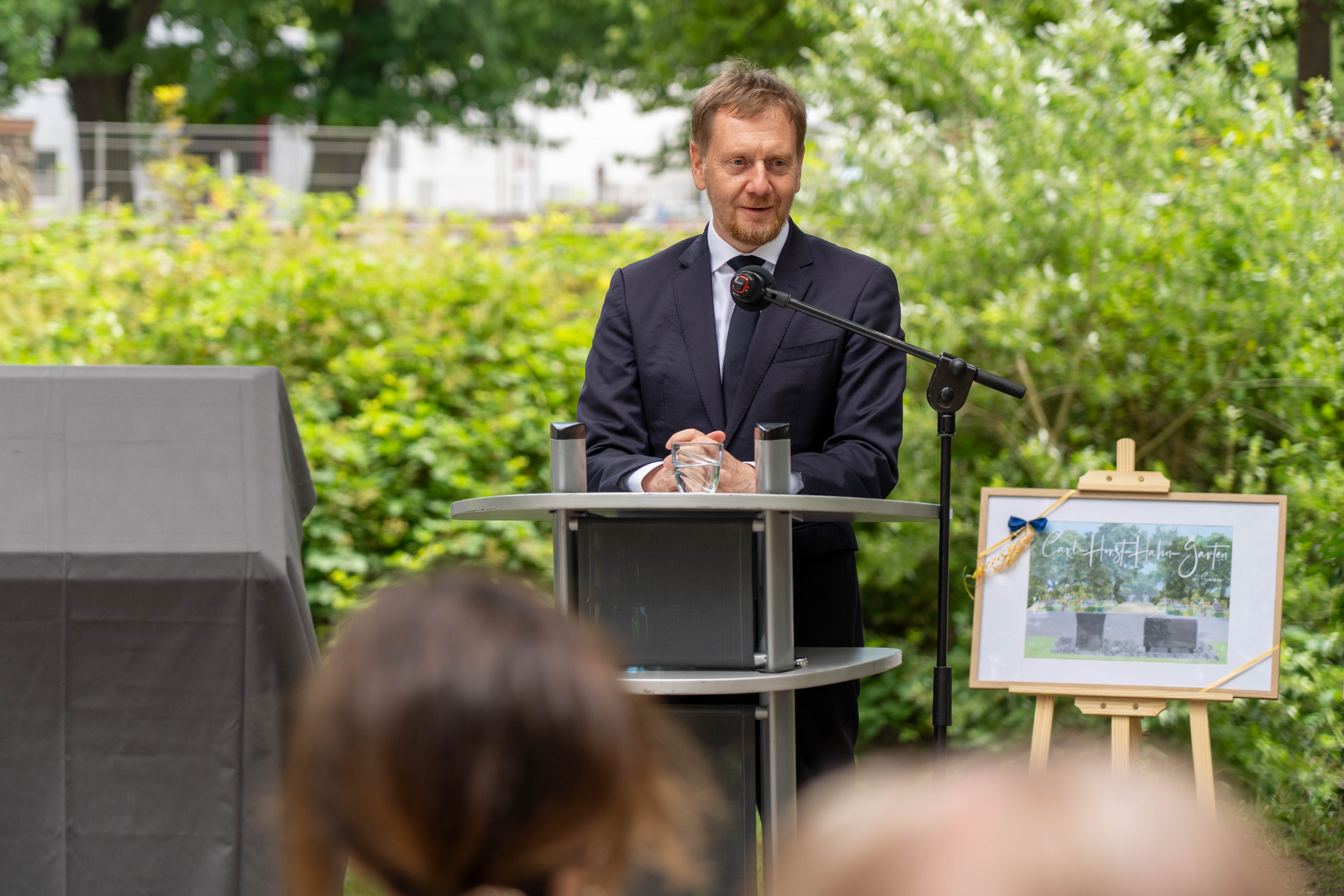
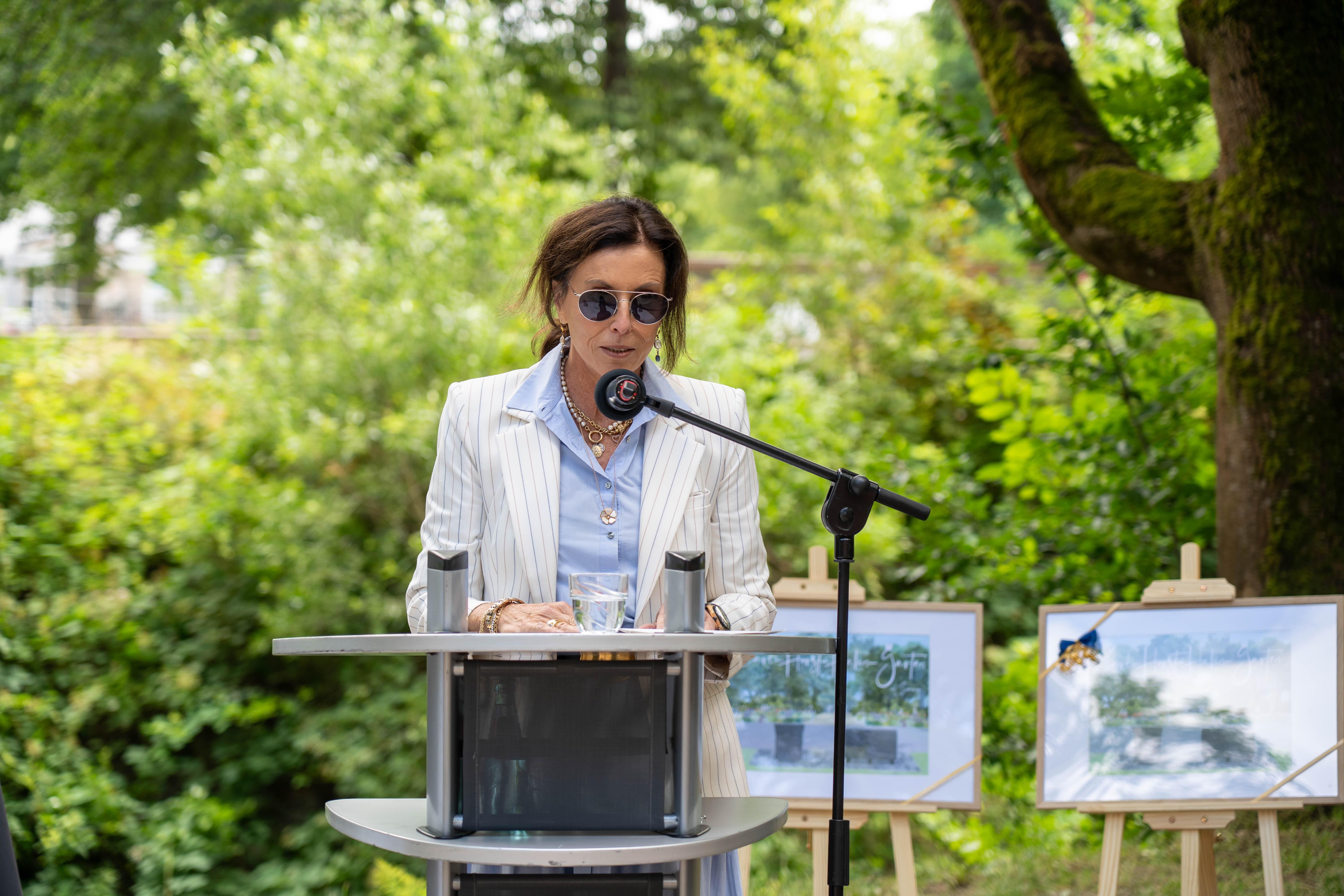
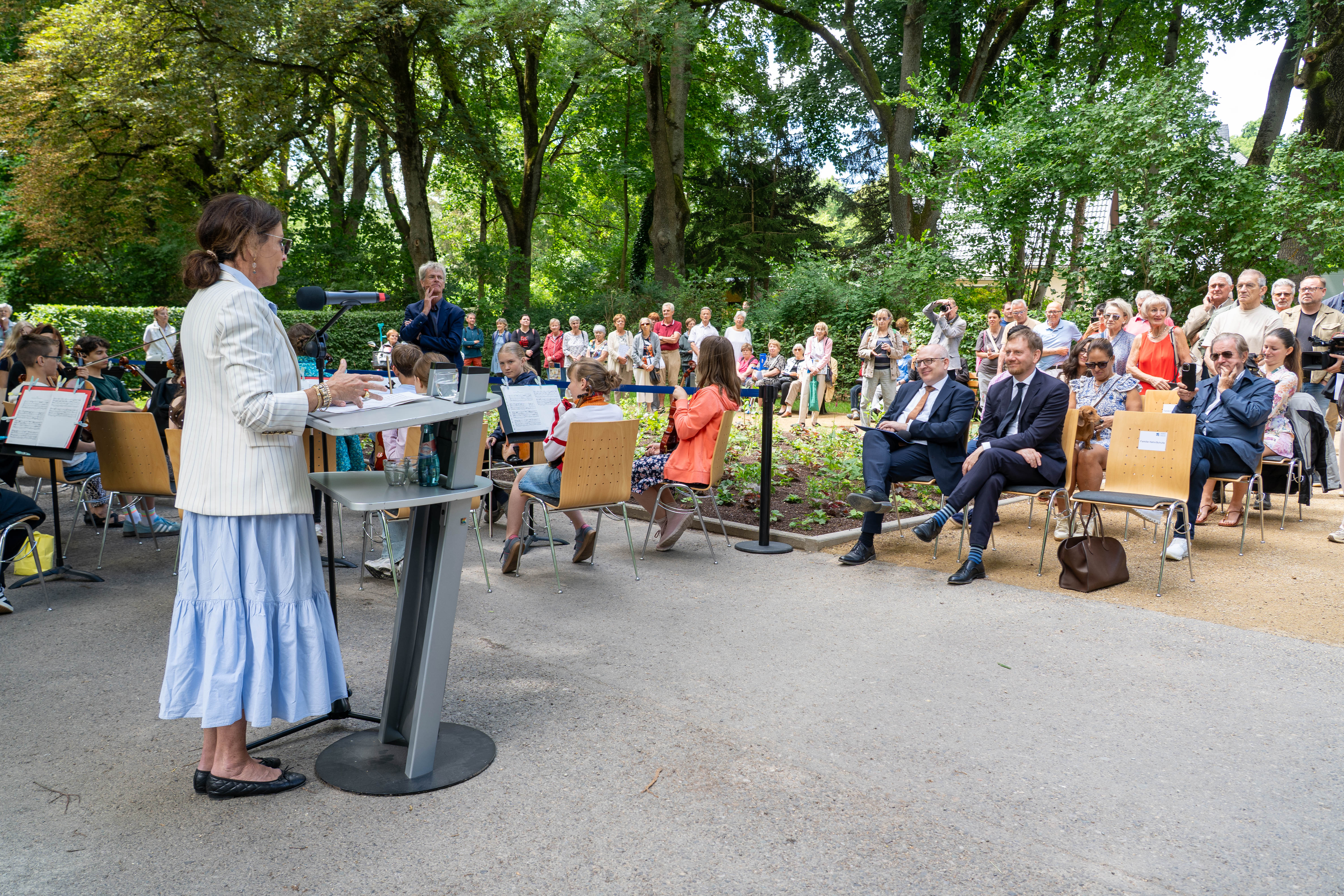
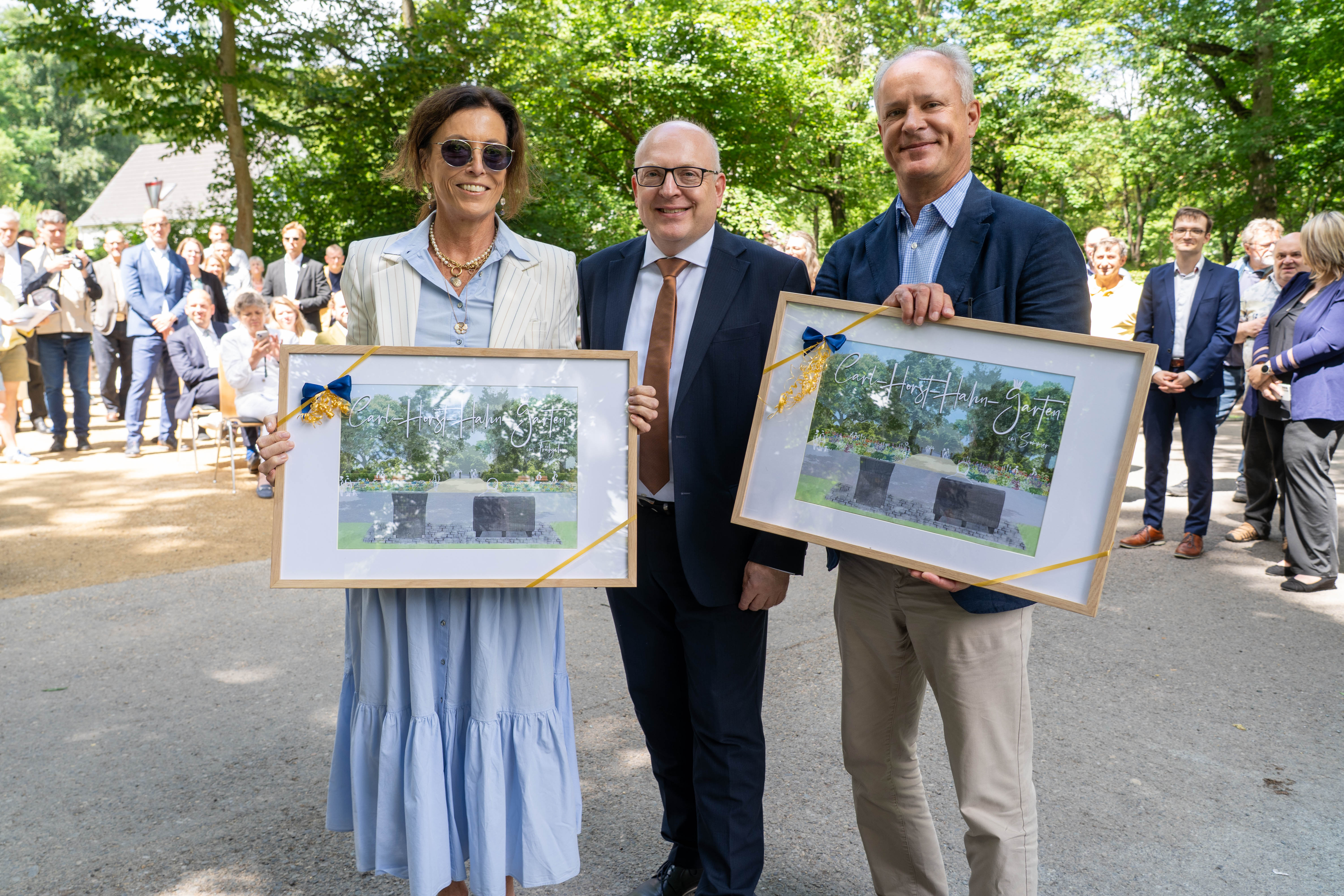
The highlight of the celebrations was the opening of the Carl-Horst-Hahn Garden in Chemnitz’s Stadtpark (Händelstraße/Schumannstraße). The newly landscaped garden is situated in a place closely linked to Carl Horst Hahn’s childhood and youth. It was from here, near his family’s villa, that he would enter the Stadtpark. The redevelopment of this area has not only preserved a piece of the city’s history, but also created a permanent memorial dedicated to an honorary citizen who had a lasting influence on the development of his home town.
Sachsen Fernsehen - Minister-President inaugurates the Carl-Horst-Hahn Garden
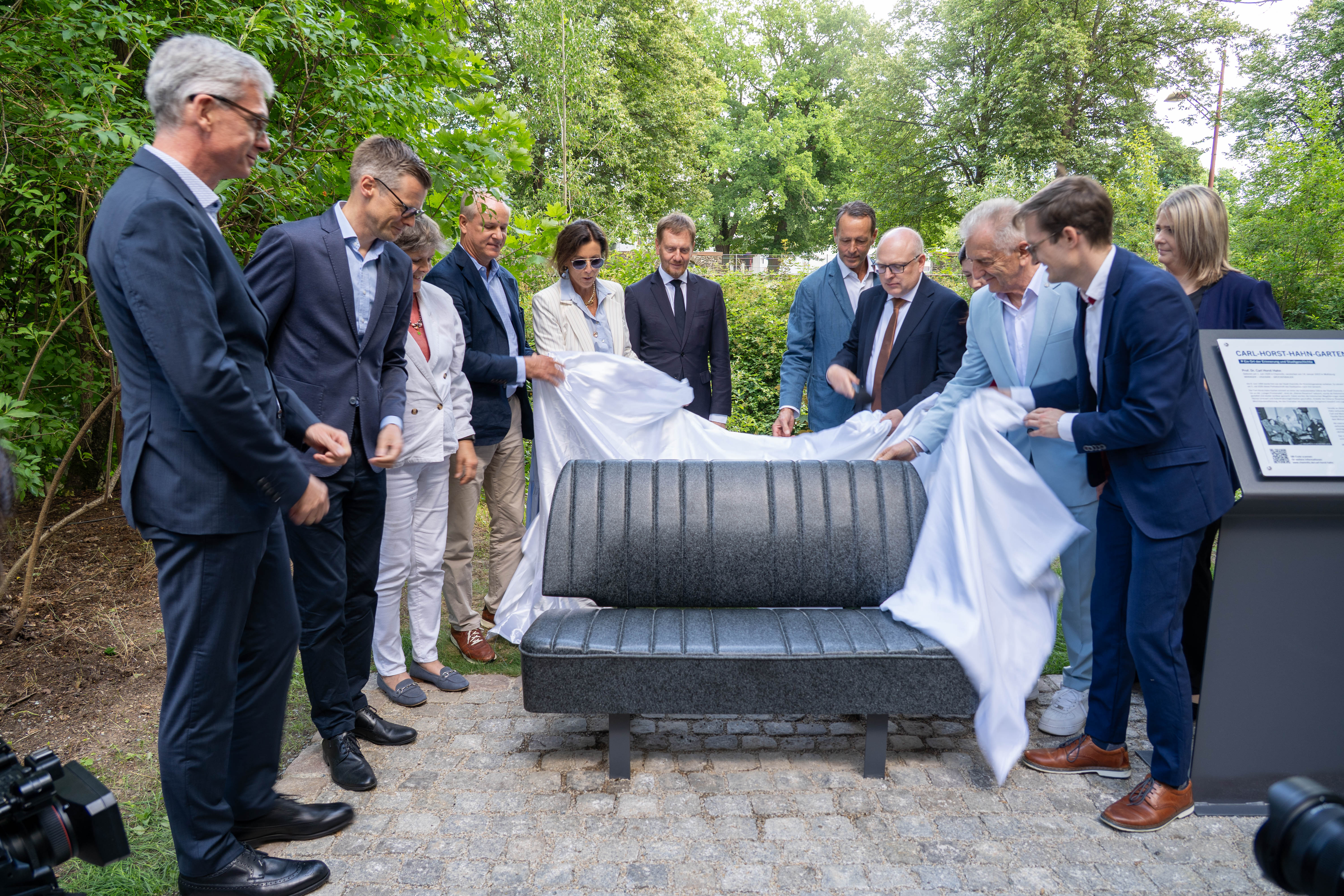
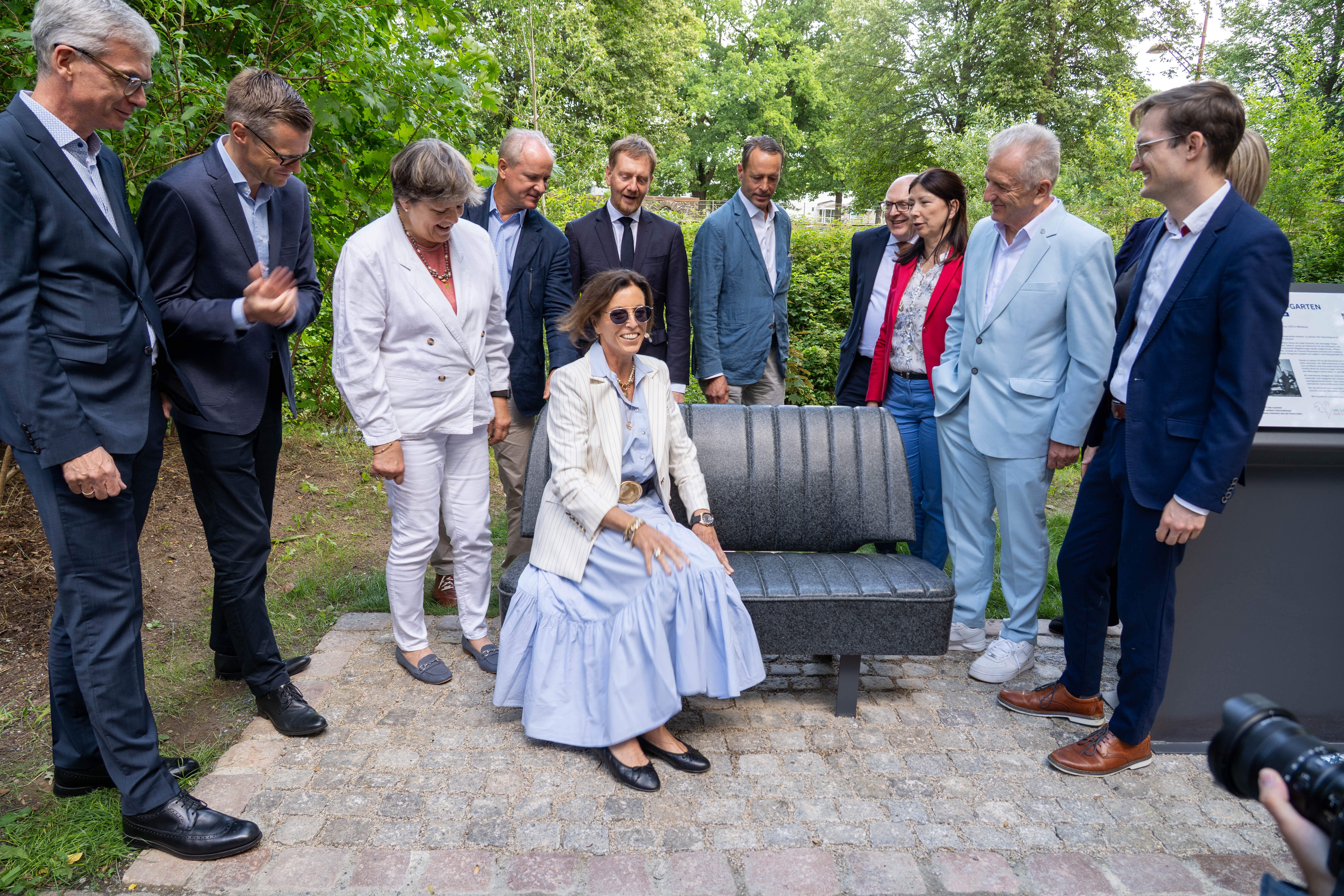
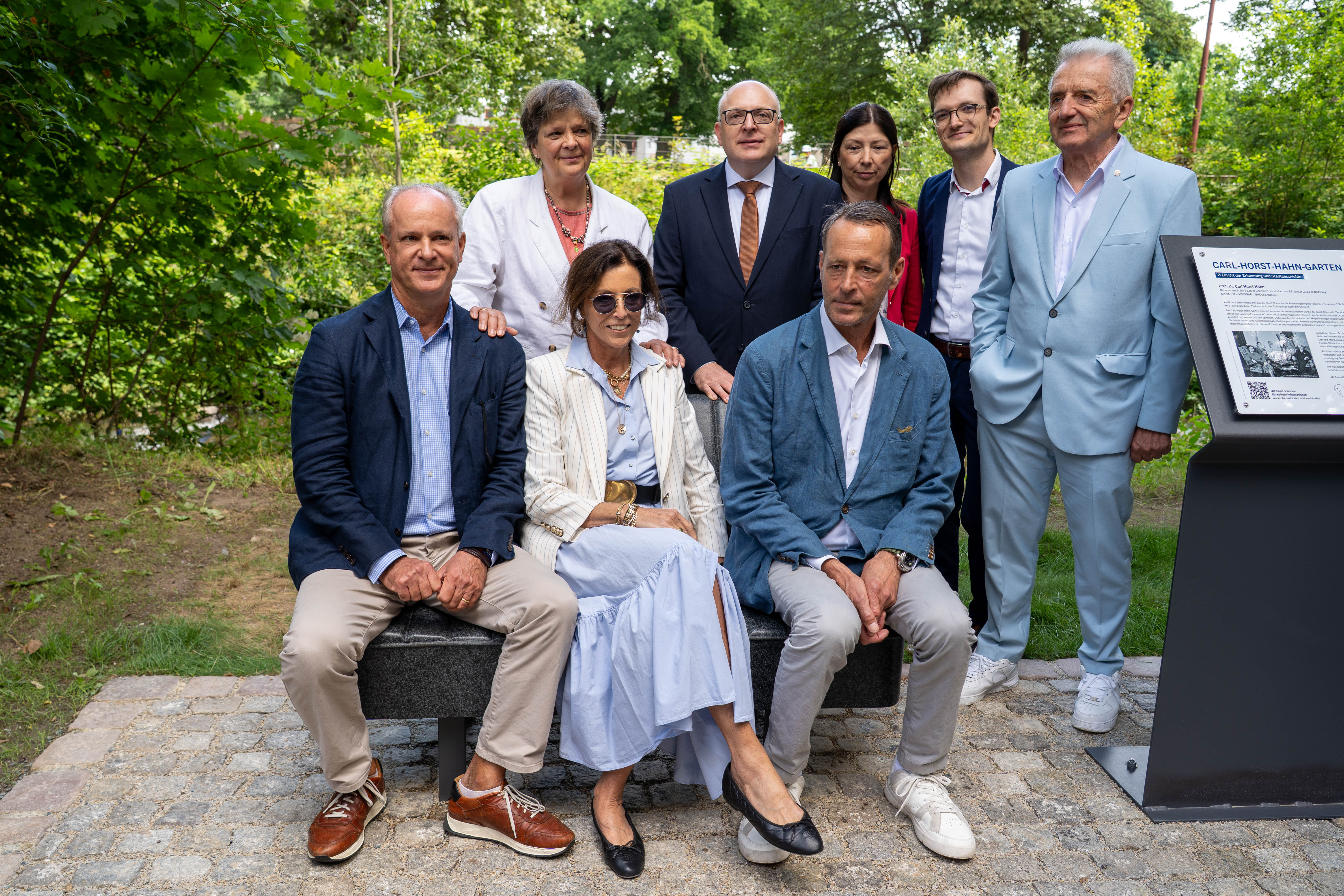
Exhibitions & Art in Public Spaces
The city tour ‘Cycling in the footsteps of Chemnitz’s automotive industry’, a cycle tour of historic sites linked to Chemnitz’s automotive industry, guided tours of the former family residence ‘Villa Hahn’, and the talk by Frieder Bach, who provided insights into the life of the automotive executive through personal anecdotes and historical photographs.
The exhibition ‘Maschinen Minis – Your Invention, Your Workshop!’ also provided an opportunity designed to inspire children and families in particular to take an interest in technology, creativity and innovation. As part of this programme, visitors were also able to reflect on the values that were important to Carl H. Hahn throughout his life, such as education, curiosity and a forward-looking outlook.
A lasting tribute has been created at the Volkswagen engine plant in Chemnitz: as part of the HALLENKUNST Mural Art Programme, a mural will serve as a permanent reminder of Carl Horst Hahn and his contributions to the Volkswagen Group, Chemnitz as an automotive hub and the development of the region. His legacy is thus given a prominent place at a site closely linked to the history of automotive manufacturing in Saxony. The artwork was created by the renowned Polish artist Mariusz Waras, also known as M-City. M-City, who now teaches as a professor at the Academy of Fine Arts in Gdańsk and has created over 700 murals in cities such as Berlin, Paris, São Paulo, London and Prague, is regarded as the ideal artist for this historic site. His art is deeply rooted in the aesthetics of industrialisation; having grown up amidst industrial landscapes, Waras understands the vibrant inner workings and dynamics of production sites like no other.