

General infection protection
Infectious diseases

An important task of the Office for Health and Prevention is to prevent communicable diseases in humans, recognise infections at an early stage and prevent them from spreading.
Certain infectious diseases (notifiable diseases) must be reported to the higher state and federal authorities in accordance with the Infection Protection Act §§ 6, 7. After each report received, investigations are carried out into the type, cause, source of infection and spread and appropriate countermeasures are initiated to prevent the disease from spreading further.
Information from the BZgA on infectious diseases:
Health passport
Persons who come into direct contact with the foodstuffs listed in Section 42 (2) of the Infection Protection Act (IfSG) must provide proof that they fulfil the health requirements. Furthermore, persons who regularly spend time in the kitchens of restaurants and other facilities with or for communal catering also require such a certificate.
Infection protection concerns everyone!
Tips for the cold season

Protect yourself and others from respiratory infections by:
1. staying at home when you are sick.
2. paying attention to hygiene when coughing and sneezing.
3. washing your hands regularly.
4. wear a mask if necessary.
5. keep your distance from people who are ill.
6. keep your hands away from your face
7 Ventilate regularly and thoroughly.
8. regularly clean surfaces that are frequently touched.
The 10 most important hygiene tips
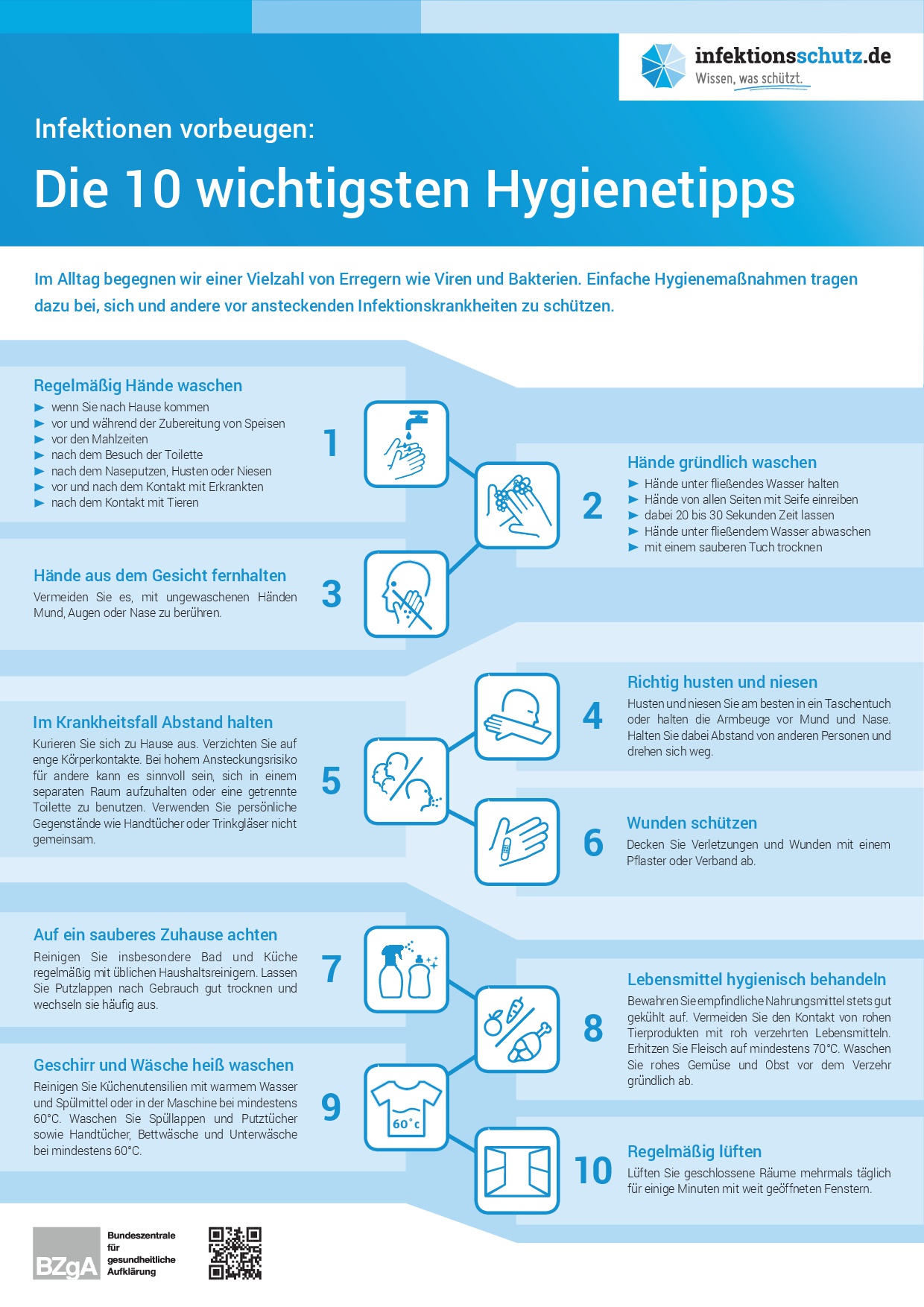
Prevent infections by
1. washing your hands regularly,
2. wash your hands thoroughly,
3. keeping your hands away from your face,
4. cough and sneeze properly (observe sneezing and coughing etiquette),
5. keep your distance,
6. protect wounds,
7. ensure a clean home,
8. handle food hygienically,
9. wash laundry and dishes hot and
10. ventilate regularly.
Vaccinations - effective protection against infectious diseases
Vaccinations are one of the most important and effective preventive measures available in medicine. Modern vaccines are well tolerated and adverse drug reactions are observed only in rare cases.
> more

To protect against infectious diseases, hands should be washed in the following situations:
1. after coming home
2. before and during food preparation
3. before meals
4. after visiting the toilet
5. after blowing your nose, coughing or sneezing
6. before and after contact with sick people
7. after contact with animals

Washing your hands helps to protect against infectious diseases. Follow these 5 steps:
1. wet your hands
2. soap your hands all over
3. take your time
4. rinse thoroughly and
5. dry carefully
Washing your hands helps to protect against infectious diseases. Follow these 5 steps:
1. wet your hands
2. soap your hands all over
3. take your time
4. rinse thoroughly and
5. dry carefully