

European networks
In addition to the 12 partner cities, the city of Chemnitz is actively represented in 11 European and international networks. Through these diverse memberships, Chemnitz is connected with partners in over 100 cities and regions throughout Europe and beyond. These collaborations cover a wide range of topics - from culture and commemorative culture, urban planning and sustainable urban development to the promotion of democracy, crime prevention and political networks at European level.
<p<p>The focus is on the continuous transfer of knowledge: through the exchange with cities and network partners throughout Europe, experience, expertise and tried-and-tested approaches are shared and made usable for our own municipal work.
In addition, the networks offer direct access to current European developments, political impetus and funding opportunities. This allows the City of Chemnitz to stay informed about relevant topics and framework conditions at an early stage and incorporate them into its work.
<p<p>Active cooperation also results in concrete projects that are developed and implemented together with international partners. In this way, networks not only become exchange formats, but also an important instrument for practical municipal cooperation and innovation.
<pEUROCITIES

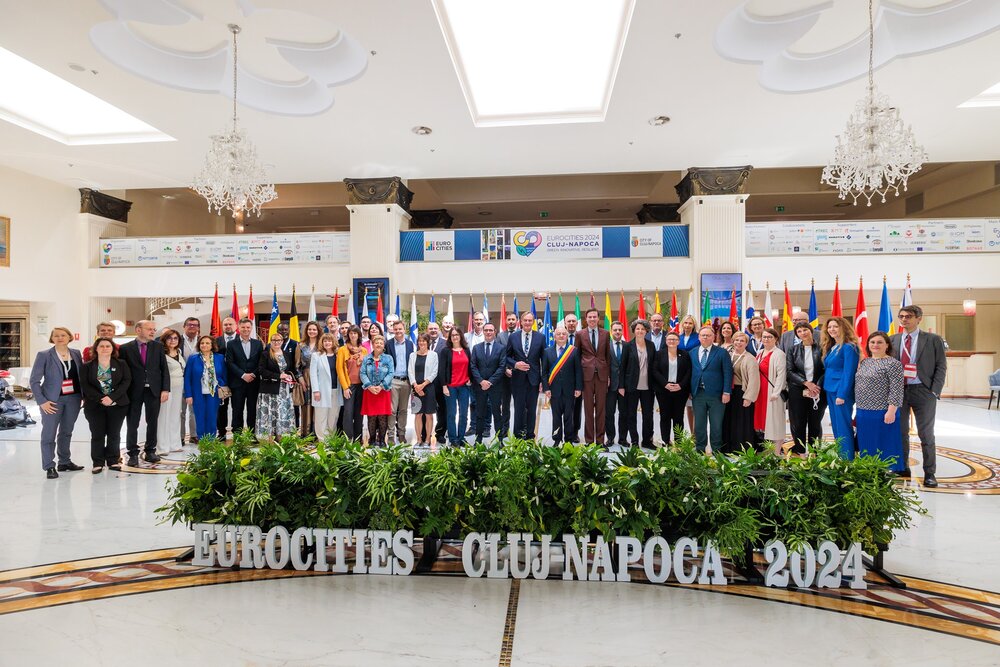
EUROCITIES is a network of major European cities. It was founded in 1986 and brings together the local governments of more than 200 major cities in 38 European countries.
The city of Chemnitz has been actively involved in EUROCITIES since 2002. There are 23 German member cities in the network, which exchange and coordinate information in the "German EUROCITIES Dialogue". Chemnitz also has the opportunity for a further form of cooperation with its partner cities, as Düsseldorf, Ljubljana, Łódź, Manchester and Tampere are also involved in the network.
EUROCITIES provides a platform for its members to share knowledge and ideas, exchange experiences, analyse common problems and develop innovative solutions. To this end, there are various forums in which working groups deal with current issues and initiate projects, activities and events.
The city of Chemnitz is part of the ECoC Family (European Capitals of Culture Family) - a Europe-wide network of former, current and future European Capitals of Culture. This network was founded in 2006 and Chemnitz joined when it won the title of European Capital of Culture 2025 in 2020.
The network serves the exchange of expertise, mutual inspiration and the long-term strengthening of cultural impact beyond the respective title year. Cities benefit in particular from the experiences of other Capitals of Culture - from programme design and the involvement of citizens to organisational and implementation processes.</p
<p>A central component is the annual ECoC Family Meeting, which usually takes place in September. This is where representatives of the participating cities come together, present their programmes and discuss current topics relating to the implementation of the Capital of Culture year.
<p<p>Membership of the ECoC Family enables the city of Chemnitz to learn from proven approaches, contribute its own experience and build sustainable European partnerships that will result in new projects that go beyond the title year as European Capital of Culture.

The city of Chemnitz is part of the ECoC Family (European Capitals of Culture Family) - a Europe-wide network of former, current and future European Capitals of Culture. This network was founded in 2006 and Chemnitz joined when it won the title of European Capital of Culture 2025 in 2020.
The network serves the exchange of expertise, mutual inspiration and the long-term strengthening of cultural impact beyond the respective title year. Cities benefit in particular from the experiences of other Capitals of Culture - from programme design and the involvement of citizens to organisational and implementation processes.</p
<p>A central component is the annual ECoC Family Meeting, which usually takes place in September. This is where representatives of the participating cities come together, present their programmes and discuss current topics relating to the implementation of the Capital of Culture year.
<p<p>Membership of the ECoC Family enables the city of Chemnitz to learn from tried-and-tested approaches, contribute its own experience and build sustainable European partnerships that result in new projects that go beyond the title year as European Capital of Culture.
Culture Next

The Culture Next network was founded in 2017 and is dedicated to the candidate cities for the European Capital of Culture that are currently in the application process or whose application process has been completed and which have or have not been awarded the title.
The European Capital of Culture (ECoC) is one of the best-known action programmes of the European Union. The dynamism and scale of this programme is attractive to cities seeking cultural, social, economic and infrastructural change. Hundreds of cities participating in this process bring a wealth of experience, good practice and knowledge to share in order to make a positive impact for Europe.
Bidding for the title of European Capital of Culture requires commitment, investment and co-operation from various local stakeholders, as the bid is an important and unique development opportunity for all participating cities. Beyond the bid itself, all these cities are developing strong cultural strategies and creating mechanisms for cultural planning and civic participation.
However, more than 80% of the cities that apply for the title do not receive it.
Culture Next tries to collect and offer possible answers to the following question: How can candidate cities - be they candidates, title holders or former candidates who did not make the cut - make the most of this extraordinary mobilisation of talent, ideas, resources and energy?
The network focuses on capacity building, organising conferences and annual meetings, and developing a platform to promote member cities and facilitate collaboration between them. The network also aims to be a voice in shaping European cultural policy.
The City of Chemnitz has been a member of the Culture Next Network since 2023.

As part of the European Creative Roof Network (ECRN), the City of Chemnitz focused on the unused urban space, the roofs, from 2020 to 2024. As part of this, the first step has been taken in Chemnitz, the mapping of the roofs.</p
Europäisches Netzwerk für Kreative DachnutzungenThe city of Chemnitz is a member of the European Coalition of Cities against Racism (ECCAR), a European network of cities to strengthen the commitment against racism and discrimination at municipal level.
<p<p>The initiative was launched by UNESCO in 2004. Today, ECCAR brings together around 140 cities from 23 European countries. The cooperation is based on a joint 10-point action plan, which all member cities have committed to implementing.
<p<p>German network and exchange
Around 60 cities in Germany are currently involved in the ECCAR network. The aim is to further develop municipal strategies against racism and actively promote a democratic, diverse society.
<p<p>A central component is the regular exchange between the cities:
- Current challenges, political developments and common goals are discussed at the annual German-speaking network meeting.
- The network of municipal anti-discrimination centres strengthens professional exchange, develops common standards and supports the establishment of sustainable local structures.
Membership enables the City of Chemnitz to benefit from tried-and-tested approaches, contribute its own experience and further develop municipal anti-racism work in a targeted manner.

The city of Chemnitz is a member of the European Coalition of Cities against Racism (ECCAR), a European network of cities to strengthen the commitment against racism and discrimination at municipal level.
<p<p>The initiative was launched by UNESCO in 2004. Today, ECCAR brings together around 140 cities from 23 European countries. The cooperation is based on a joint 10-point action plan, which all member cities have committed to implementing.
<p<p>German network and exchange
Around 60 cities in Germany are currently involved in the ECCAR network. The aim is to further develop municipal strategies against racism and actively promote a democratic, diverse society.
<p<p>A central component is the regular exchange between the cities:
- Current challenges, political developments and common goals are discussed at the annual German-speaking network meeting.
- The network of municipal anti-discrimination centres strengthens professional exchange, develops common standards and supports the establishment of sustainable local structures.
Membership enables the City of Chemnitz to benefit from tried-and-tested approaches, contribute its own experience and further develop municipal anti-racism work in a targeted manner.
The city of Chemnitz has been a member of the international network Mayors for Peace since 2006, which campaigns worldwide for nuclear disarmament and lasting peace.
Initiated by the city of Hiroshima, the alliance now includes over 7,500 cities and municipalities from 163 countries. The network is also strongly represented in Germany: More than 550 municipalities are actively committed to the common goals.
<p<p>As a member, the city of Chemnitz is involved in international cooperation for peace and security and at the same time sends out a visible signal at municipal level.
Within the network, the City of Hanover is the lead city responsible for Chemnitz and coordinates activities at national level.
<p
The city of Chemnitz has been a member of the international network Mayors for Peace since 2006, which campaigns worldwide for nuclear disarmament and lasting peace.
Initiated by the city of Hiroshima, the alliance now includes over 7,500 cities and municipalities from 163 countries. The network is also strongly represented in Germany: More than 550 municipalities are actively committed to the common goals.
<p<p>As a member, the city of Chemnitz is involved in international cooperation for peace and security and at the same time sends out a visible signal at municipal level.
Within the network, the City of Hanover is the lead city responsible for Chemnitz and coordinates activities at national level.
<pThe City of Chemnitz is networked via the German Association of Cities in the Europe and International Affairs working group and receives up-to-date information on European developments, funding programmes and political initiatives.
<p<p>Europe is largely shaped in the cities: This is where European policy and its impact can be experienced directly. At the same time, European Union decisions influence many areas of urban life. The Association of German Cities supports its member cities in recognising these developments at an early stage, categorising them and making them usable for municipal practice.</p
<p>In addition, the Association of German Cities promotes dialogue and cooperation between cities - both at European and international level. Topics such as sustainable development, social cohesion and peace are at the centre of this. City partnerships and international networks make an important contribution to tackling global challenges together and strengthening dialogue across borders.</p
<p>By participating in the working group, the City of Chemnitz is able to benefit from the experience of other municipalities and incorporate current European issues into its own work at an early stage.</p

The City of Chemnitz is networked via the German Association of Cities in the Europe and International Affairs working group and receives up-to-date information on European developments, funding programmes and political initiatives.
<p<p>Europe is largely shaped in the cities: This is where European policy and its impact can be experienced directly. At the same time, European Union decisions influence many areas of urban life. The Association of German Cities supports its member cities in recognising these developments at an early stage, categorising them and making them usable for municipal practice.</p
<p>In addition, the Association of German Cities promotes dialogue and cooperation between cities - both at European and international level. Topics such as sustainable development, social cohesion and peace are at the centre of this. City partnerships and international networks make an important contribution to tackling global challenges together and strengthening dialogue across borders.</p
<p>By participating in the working group, the City of Chemnitz is able to benefit from the experience of other municipalities and incorporate current European issues into its own work at an early stage.</p
The city of Chemnitz is part of the German-French Future Network, a joint format for strengthening cooperation between Germany and France.
<p<p>The Zukunftswerk was founded in 2020 as part of the Aachen Treaty, which Germany and France signed in 2019. The aim is to develop joint perspectives and solutions for key societal challenges and to bring together ecological, social, technological and economic aspects.
<p<p>The Franco-German Future Programme is currently being realigned and will place a special focus on digital topics in future. The basis for this is the joint economic agenda of both countries, which was adopted in 2023.</p

The city of Chemnitz is part of the German-French Future Network, a joint format for strengthening cooperation between Germany and France.
<p<p>The Zukunftswerk was founded in 2020 as part of the Aachen Treaty, which Germany and France signed in 2019. The aim is to develop joint perspectives and solutions for key societal challenges and to bring together ecological, social, technological and economic aspects.
<p<p>The Franco-German Future Programme is currently being realigned and will place a special focus on digital topics in future. The basis for this is the joint economic agenda of both countries, which was adopted in 2023.</p
Council of European Municipalities and Regions (CEMR)

The Council of European Municipalities and Regions (CEMR) is a Europe-wide organisation of local and regional authorities. It brings together 60 national associations of local authorities from 41 European countries. The Council thus represents around 100,000 local authorities throughout Europe. With its activities, CEMR promotes a united Europe based on local and regional self-government and democracy.
To achieve this goal, CEMR aims to shape the future of Europe by strengthening municipalities and regions, influencing European legislation and policy, exchanging experiences at local and regional level and co-operating with partners in other parts of the world.
In Germany alone, CEMR represents around 800 cities, municipalities and rural districts that are committed to Europe. The municipal umbrella organisations at federal level - the German Association of Cities, the German Association of Towns and Municipalities and the German County Council Association - are also members of the German section of CEMR. Its services include, in particular, making municipalities "fit for Europe", informing them about EU funding programmes and supporting municipal partnerships.
The City of Chemnitz has been a member of CEMR since 2010.
Congress of Local and Regional Authorities of the Council of Europe
The Congress is the voice of cities and regions in Europe. Established in 1994 as a consultative body of the Council of Europe, its 636 elected representatives represent over 200,000 local and regional authorities in 47 Council of Europe member states. As a political assembly, the Congress of Local and Regional Authorities of Europe (CLRAE) promotes local and regional democracy, regional governance and strengthens local self-government. To this end, the Congress permanently monitors compliance with the European Charter of Local Self-Government, observes local and regional elections and makes recommendations to the governments of the 47 member states.The German municipal delegation to the CLRAE consists of 18 full members.
The CLRAG is also responsible for coordinating the European Week of Local Democracy. The week, which is held annually around 15 October, draws attention to the importance of local self-government with campaigns in the individual municipalities of the 47 member states of the Council of Europe.
Anna Lindh Foundation
The Anna Lindh Euro-Mediterranean Foundation for Dialogue between Cultures was established in December 2003 at the meeting of foreign ministers for the Euro-Mediterranean Partnership in Naples. The Foundation is thus the first institution of the Euro-Mediterranean Partnership based on the Barcelona Process launched in November 1995.42 partner states form the Foundation's network, which is supplemented by a further actor - the Foundation's General Secretariat in Alexandria. Partner countries are the 28 states of the European Union, as well as Albania, Algeria, Egypt, Bosnia and Herzegovina, Israel, Jordan, Croatia, Lebanon, Morocco, Mauritania, Monaco, Montenegro, Palestine, Syria, Tunisia and Turkey. The largest network of civil society organisations promoting intercultural dialogue thus comprises 4,000 non-governmental organisations, public institutions, foundations, local and regional authorities as well as private institutions.
The foundation particularly supports projects with direct co-operation across borders. Young people are the most important target group. It also aims to promote cooperation and growing understanding through comprehensive dialogue between Europe, the Mediterranean states and the Middle East.