

Stolpersteine in Chemnitz
Ernst Gerhard Frank, Emma Elisabeth Frank, Günther Konrad Frank and Horst Heinz Frank
Ernst Gerhard Frank, Emma Elisabeth Frank, Günther Konrad Frank and Horst Heinz Frank

Ernst Gerhard Frank
Born: 24 August 1892
Died: 3 November 1972
Emma Elisabeth Frank, née Goeritz
Born: 15 January 1893
Died: 6 April 1986
Günther Konrad Frank
Born: 1 July 1925
Died: 6 November 2007
Horst Heinz Frank
Born: 26 September 1926
Died: 26 August 2012
Location:
Beckerstrasse 13
Stolperstein laid on:
6 May 2026
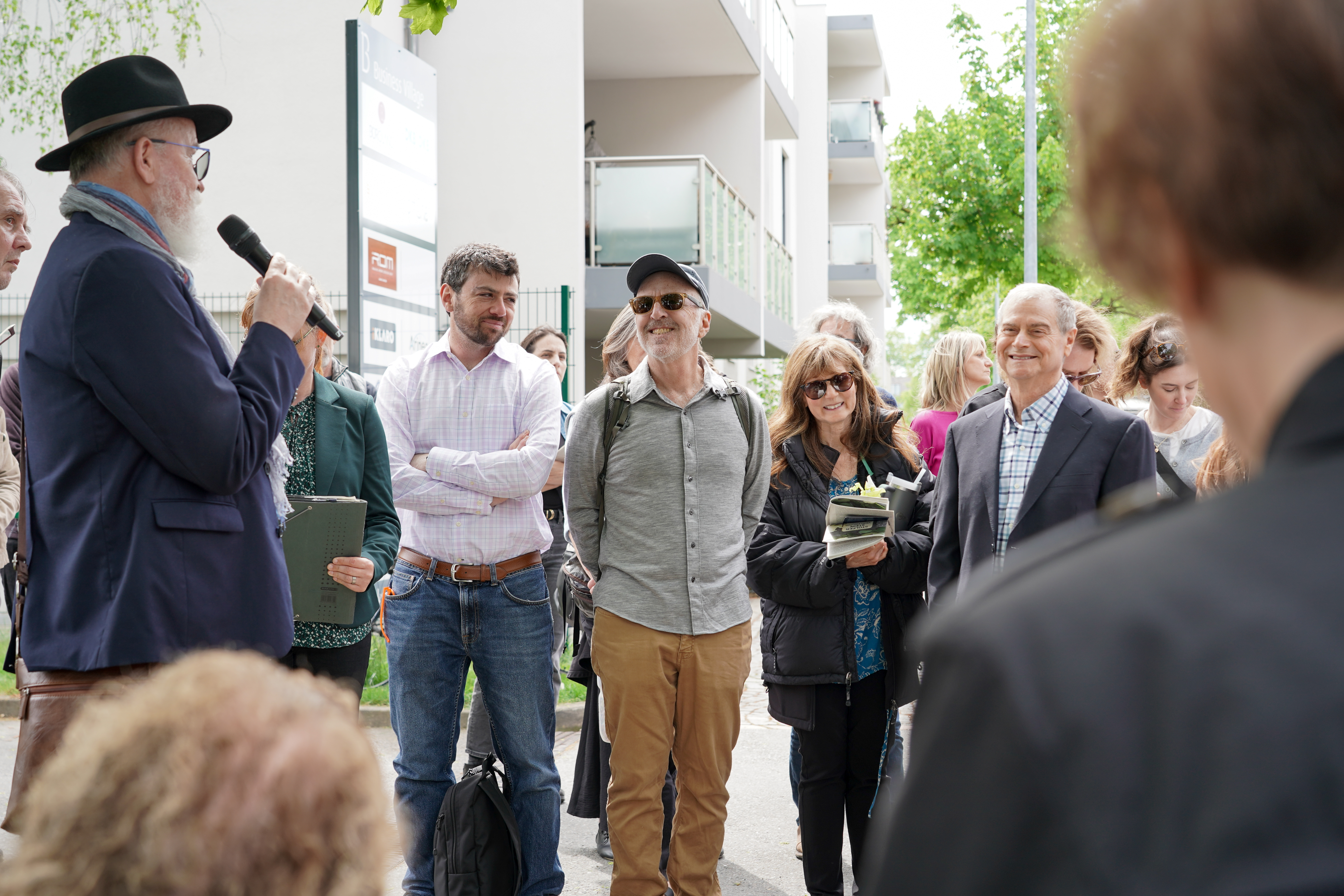
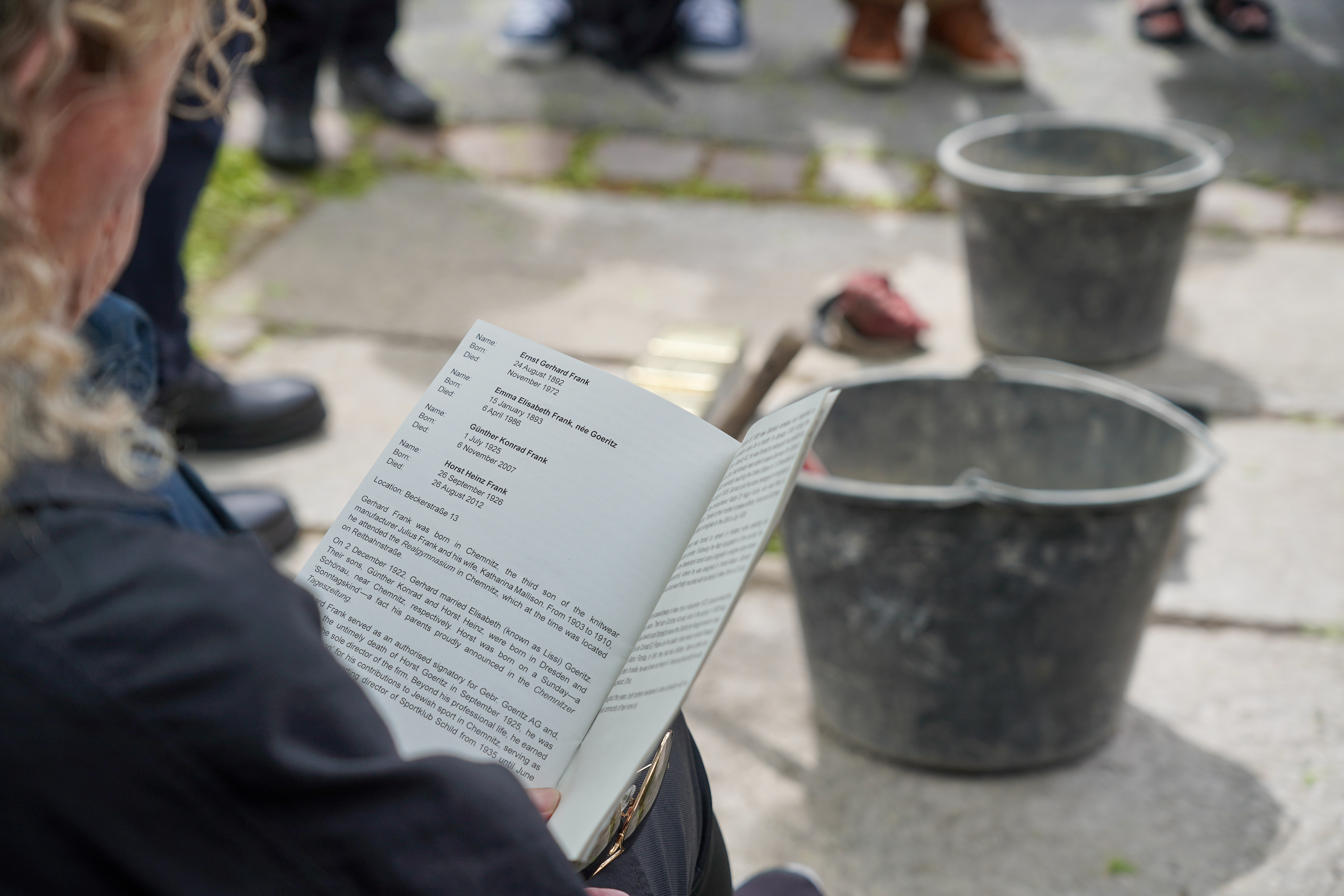
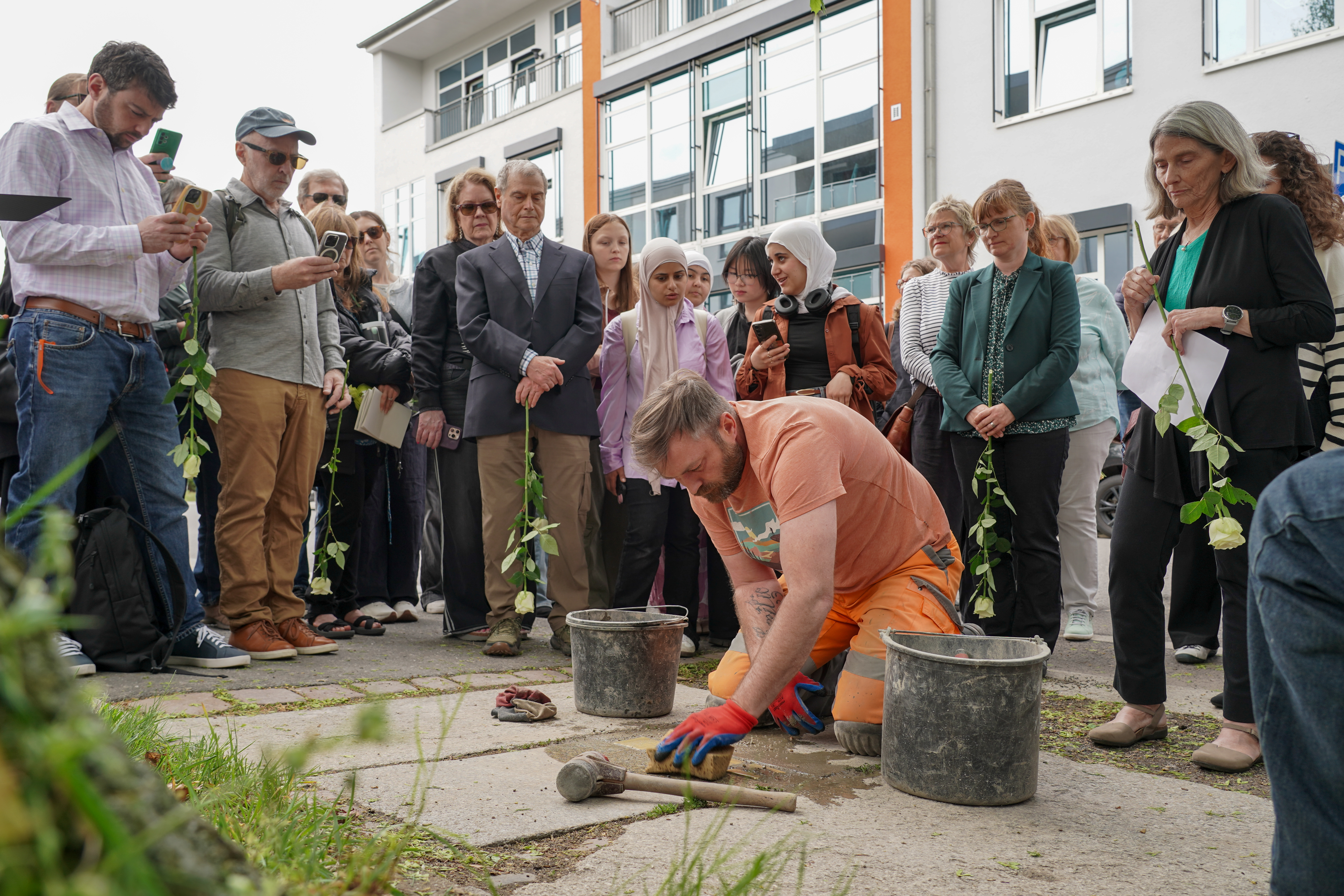
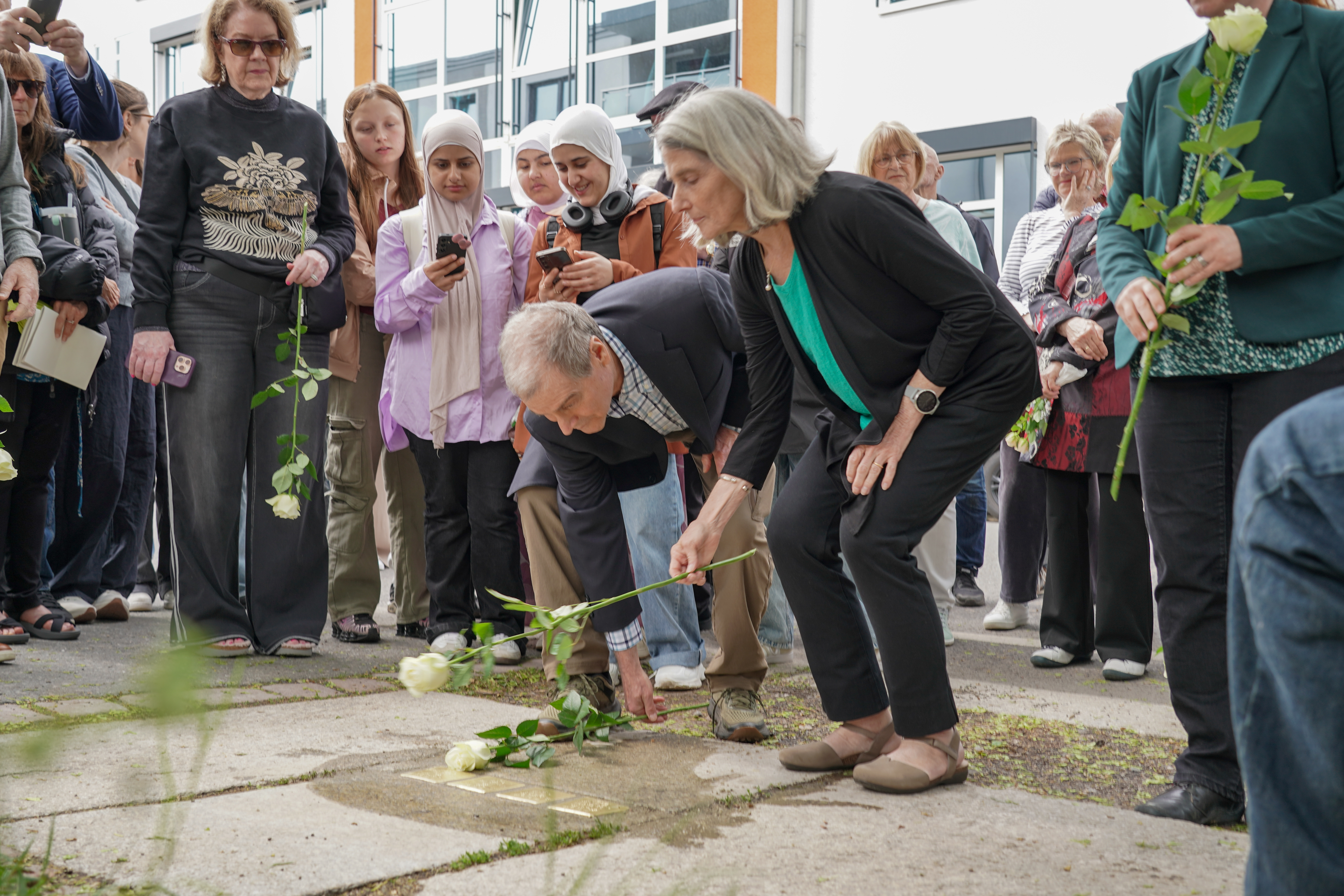
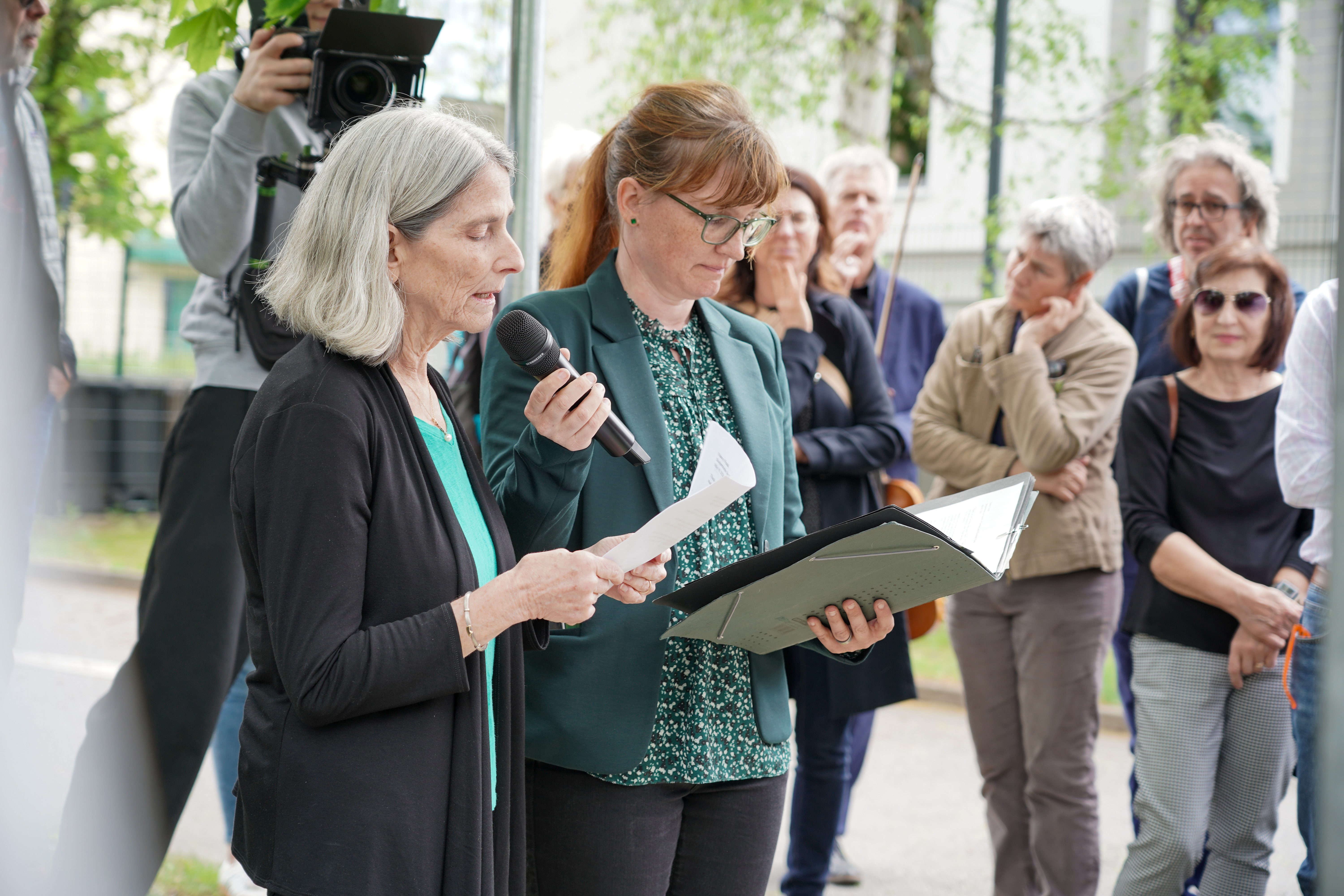
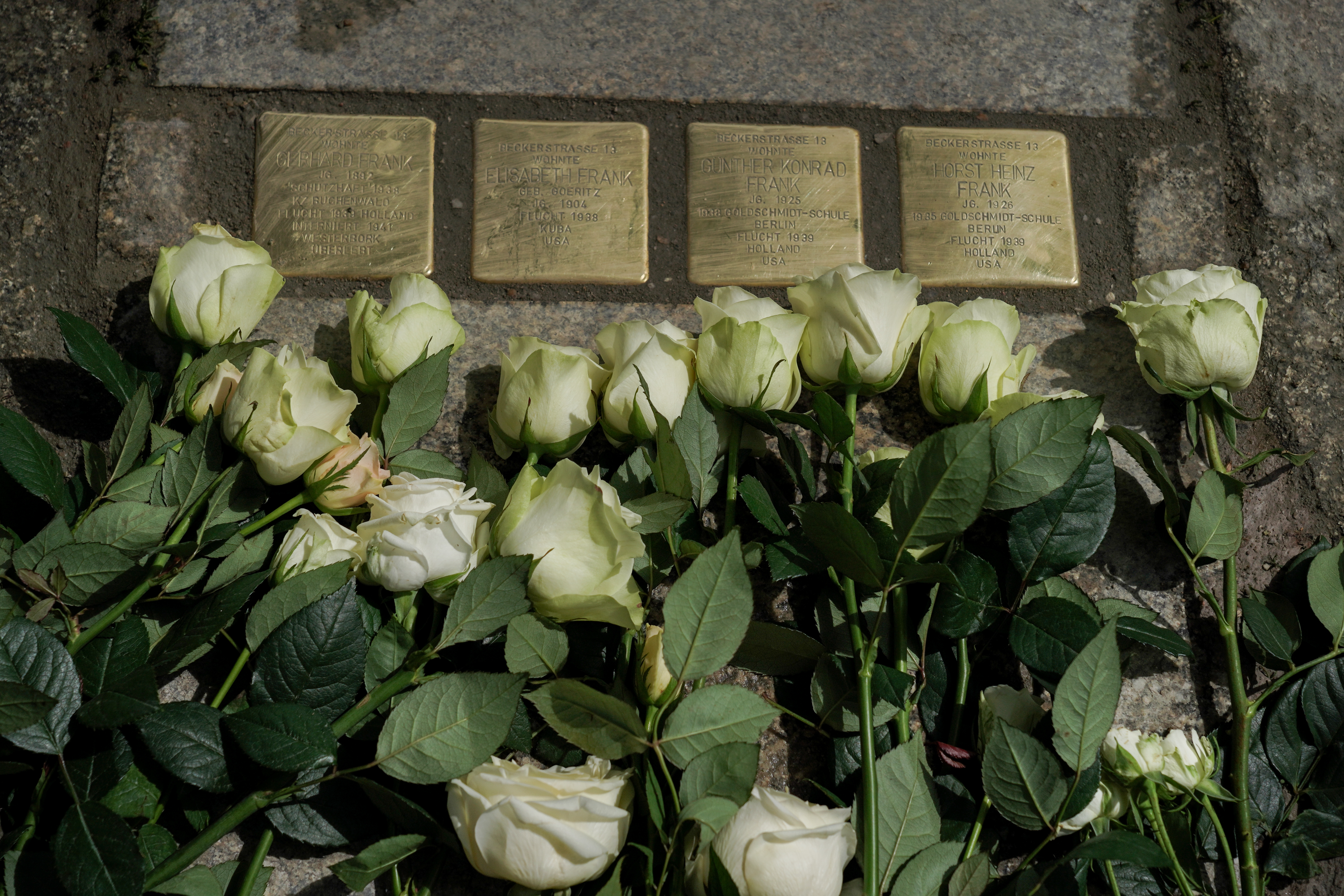
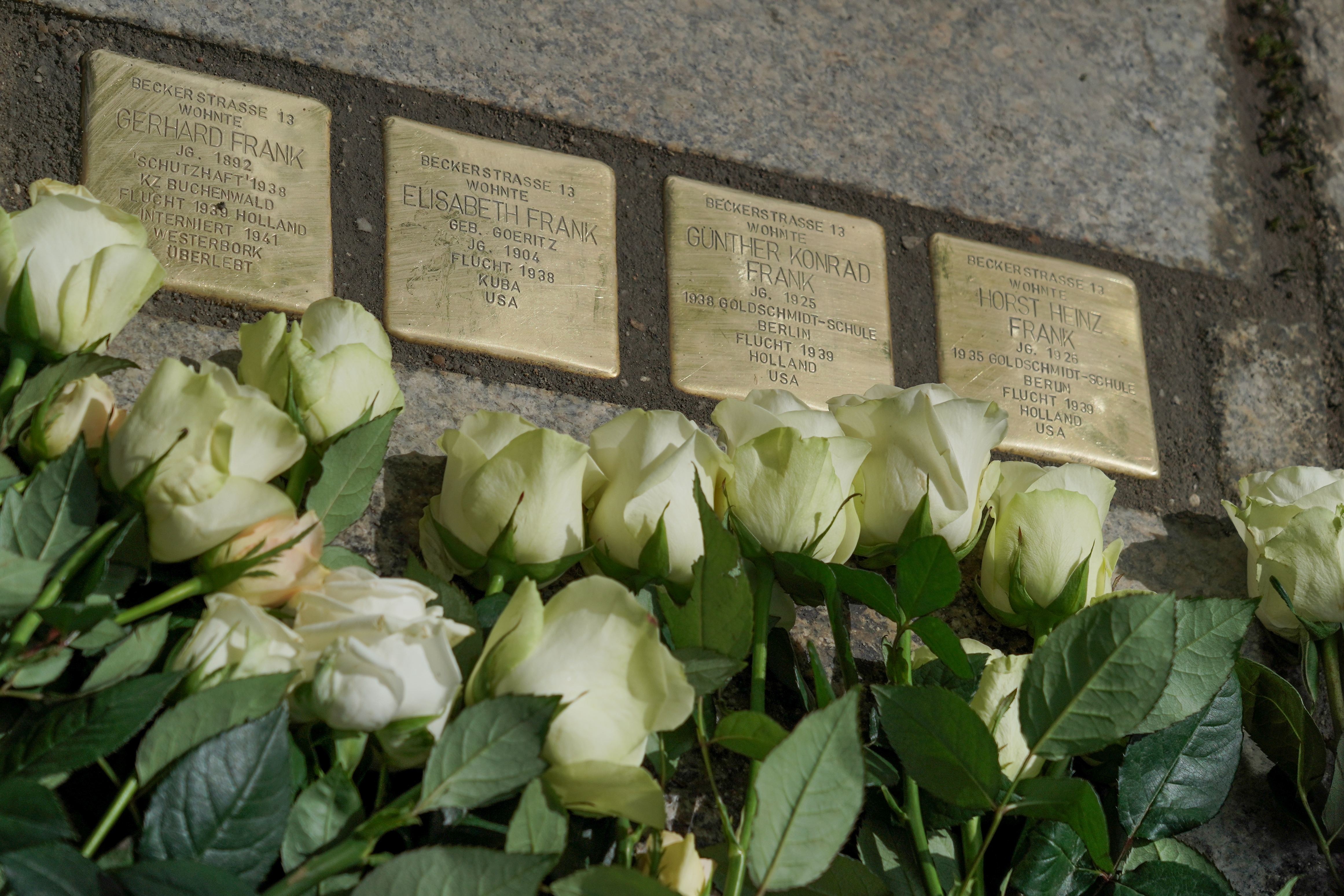
Photos of the laying of the Stumbling Stones

Life Path
Gerhard Frank was born in Chemnitz, the third son of the knitwear manufacturer Julius Frank and his wife, Katharina Mallison. From 1903 to 1910, he attended the Realgymnasium in Chemnitz, which at the time was located on Reitbahnstraße.
On 2 December 1922, Gerhard married Elisabeth (known as Lissi) Goeritz. Their sons, Günther Konrad and Horst Heinz, were born in Dresden and Schönau, near Chemnitz, respectively. Horst was born on a Sunday—a “Sonntagskind”—a fact his parents proudly announced in the Chemnitzer Tageszeitung.
Gerhard Frank served as an authorised signatory for Gebr. Goeritz AG and, following the untimely death of Horst Goeritz in September 1925, he was appointed the sole director of the firm. Beyond his professional life, he earned “great merit” for his contributions to Jewish sport in Chemnitz, serving as the chairman and sporting director of Sportklub Schild from 1935 until June 1937.
The November Pogrom of 1938 saw Gerhard arrested and deported to Buchenwald concentration camp for a month. In January 1939, during the “Aryanisation” of Gebr. Goeritz AG, he was forced to relinquish his position on the board. His wife, Lissi, had already been able to leave Germany for Cuba in the summer of 1938, eventually reaching the United States of America on 13 December of that year. In the spring of 1939, Gerhard and his sons managed to emigrate to Holland, where they encountered Rabbi Dr Hugo Fuchs, who was then in transit to Argentina. Thanks to their mother’s tireless efforts, Horst and Günther were also permitted to emigrate to the USA in July 1939.
However, Gerhard was forced to remain in Holland while awaiting an immigration quota number. Following the NS-occupation of the country, he was interned in the Westerbork transit camp (originally a refugee camp known as Camp Westerbork), where he was assigned to forced labour. Gerhard survived the war and was finally reunited with his family in New York on 20 July 1946.
Gerhard Frank passed away in New York in November 1972; Lissi outlived him by fourteen years. Their son Günther Konrad, who in the spring of 1938 had been the last Jewish pupil forced to leave the Städtische Realgymnasium, lived in New York as Conrad G. Frank until his death. Horst Heinz married Rosalyn Morris in Miami, Florida, in 1954; they had two children, Wayne Leslie and Nancy Eileen. In exile, he was known as Henry H. Frank and lived with his wife in Beachwood, Ohio.
Throughout the years, both brothers maintained a close connection with the Jewish community of their home city.
Author: Dr Jürgen Nitsche